Spruce Transplant – June 7, 2024

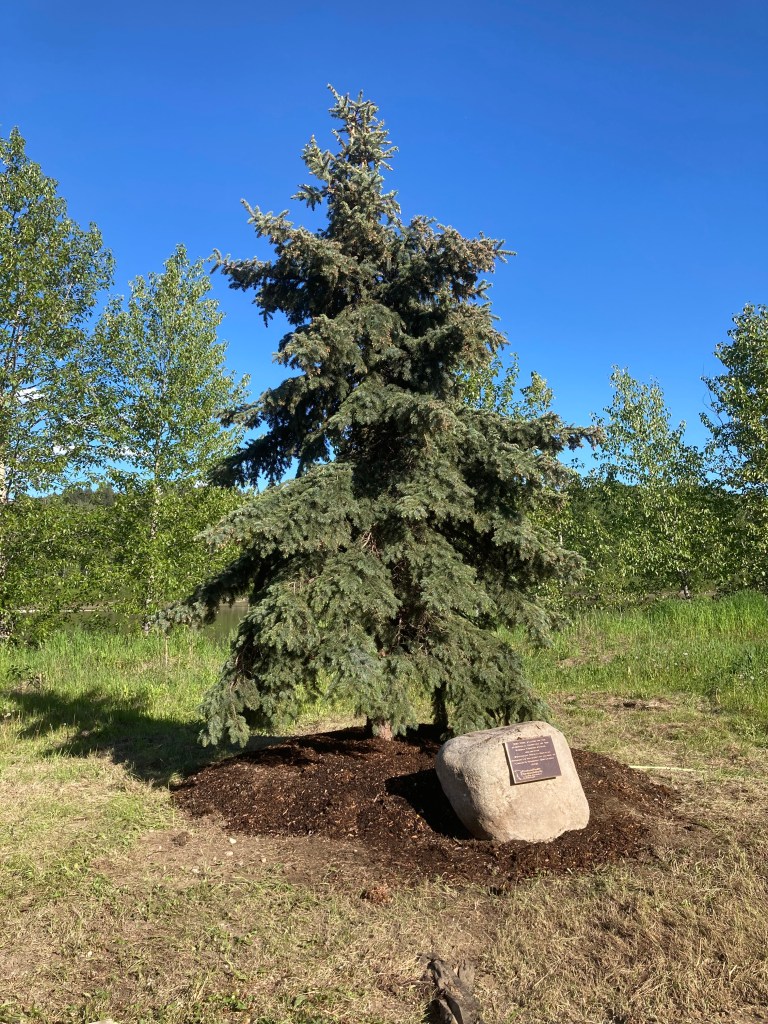
Construction for a new parkade at the BC Cancer Center for the North was going well–a big pit in the ground and workers and machinery busy all over. Except for one thing… a 20-foot spruce tree, planted twelve years ago by Lheidli T’enneh First Nation to recognize the provincial health services. Of course, no one wanted to rip it out and throw it away unceremoniously, so it was decided that it would need to be moved, alive. Enter, Whispering Boughs!
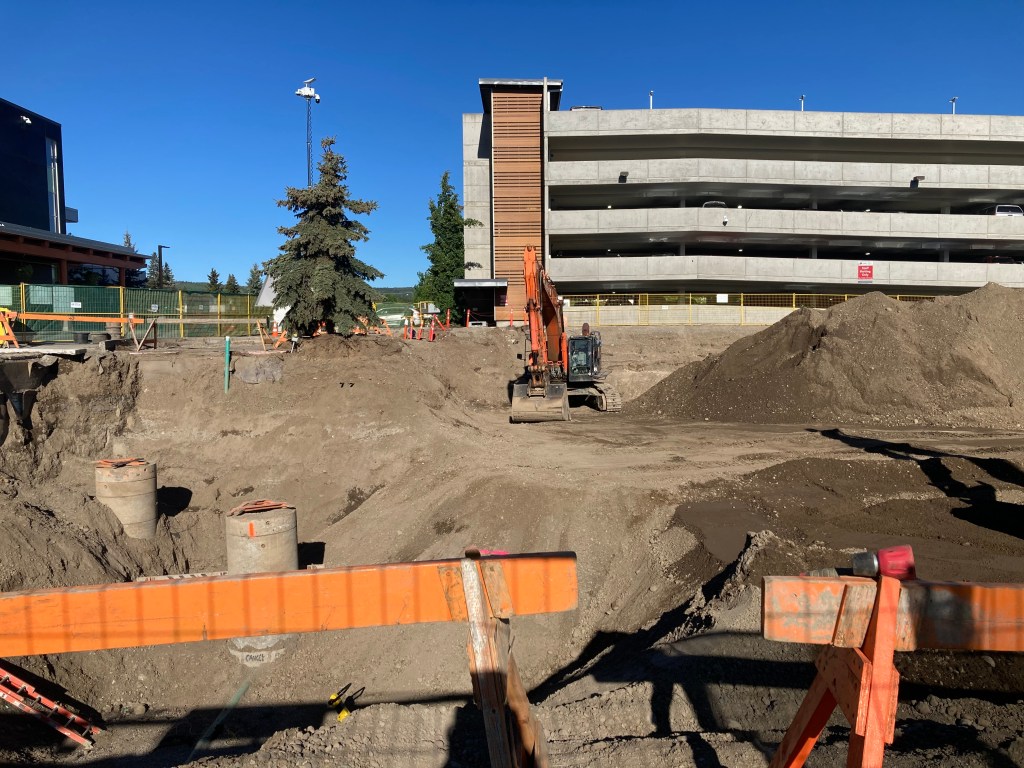
If you’re hoping to transplant a mature tree–or anything more than a sapling–and give it a chance at survival, it’s a good idea to get an arborist involved. While relatively large trees can certainly be moved and thrive in their new locations, they can be sensitive to disturbances and will need extra care in the removal, transportation, and transplantation processes, as well as ongoing care once they’re back in the ground. We don’t just want it to make it to its new home alive, but to continue grow there.

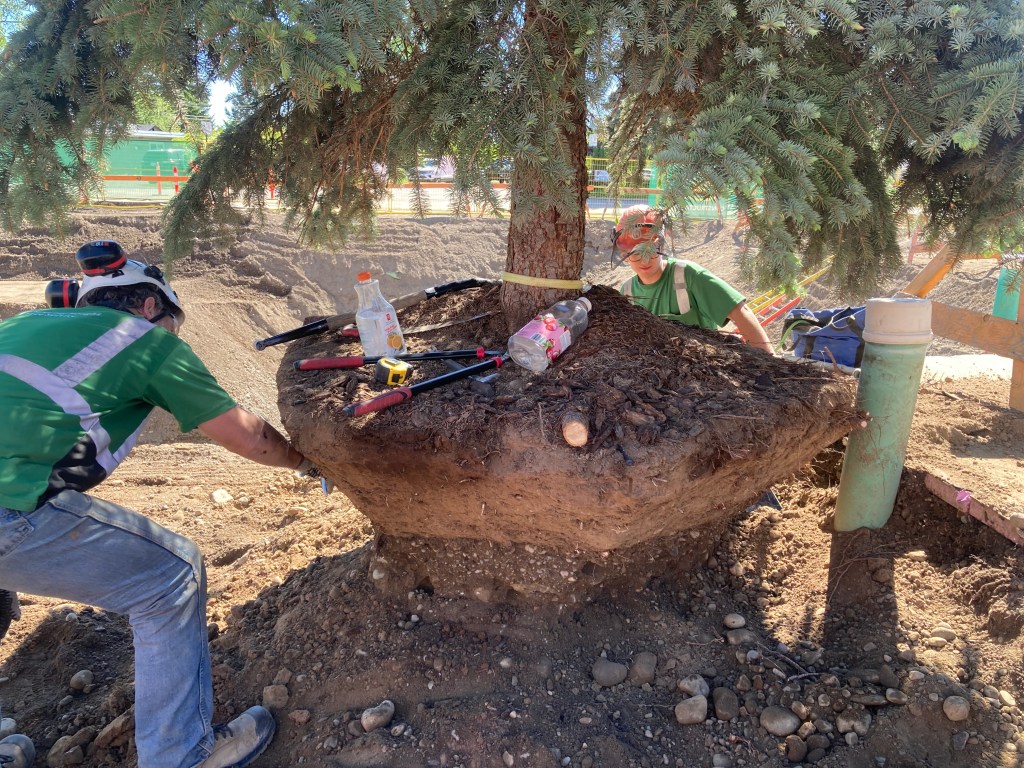
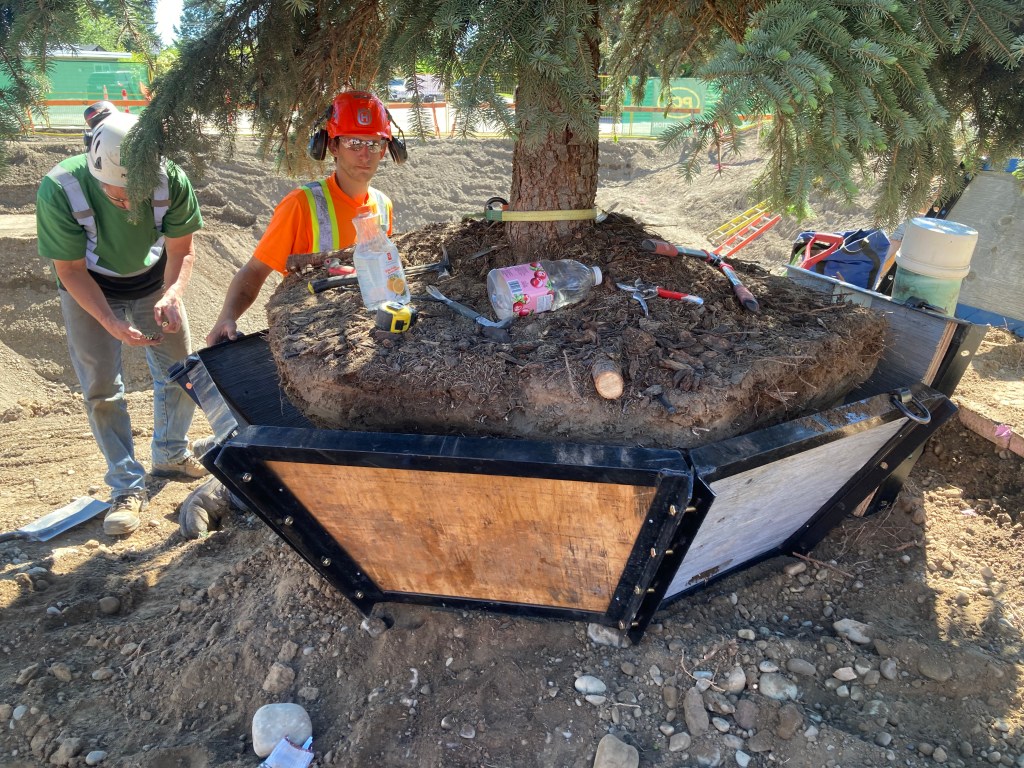
So of course, the priority was to minimize the damage undergone by the tree as much as possible during the move. It may seem impossible to do, but trees can actually survive really well as long as you keep enough of the root ball, about one foot across the root ball for every inch in diameter of the trunk. This meant we were aiming for a 6-foot root ball, which had to be shaped to fit the custom cage that had been built to support the root ball–lifting it while keeping most of the dirt around the roots.

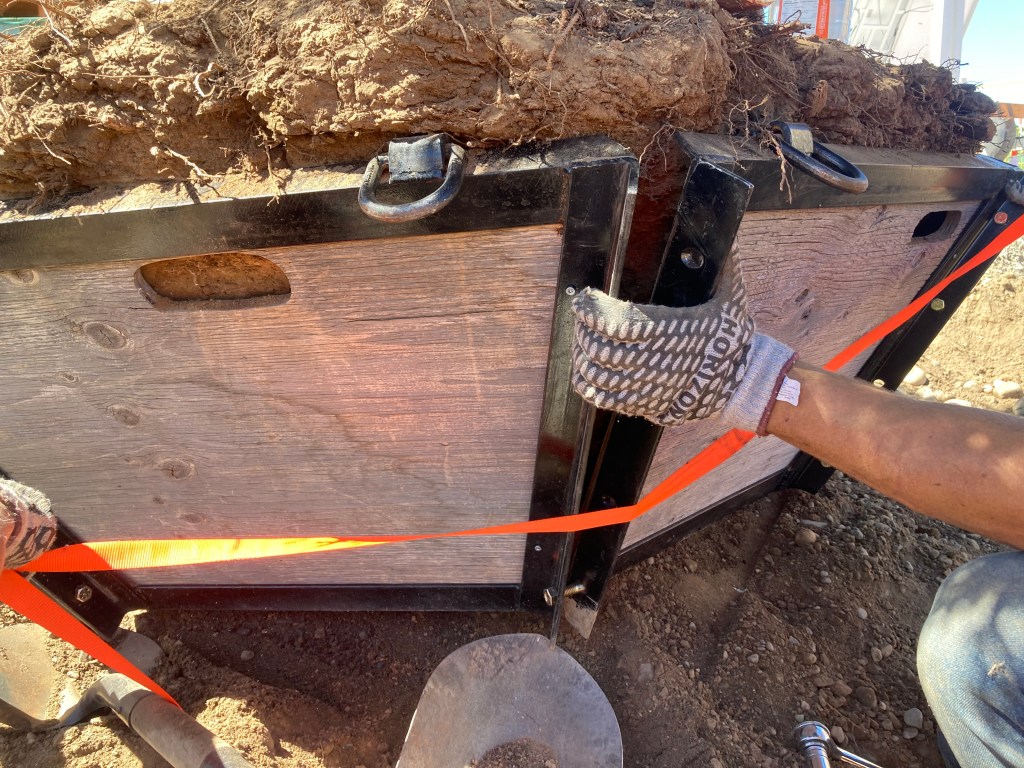
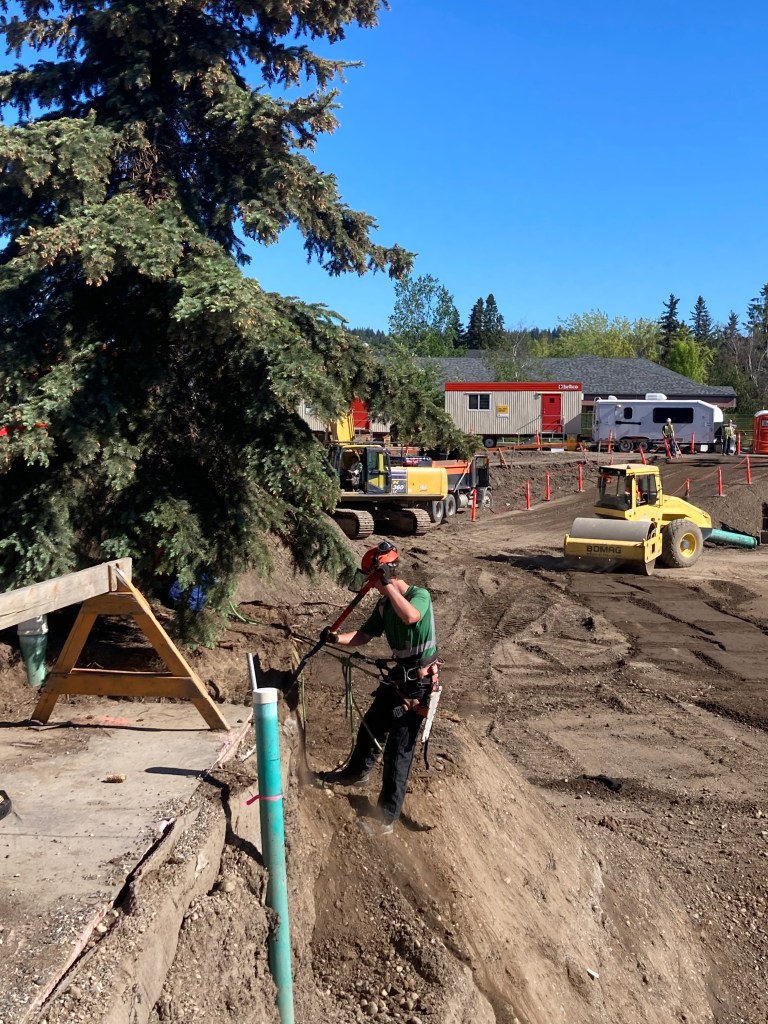
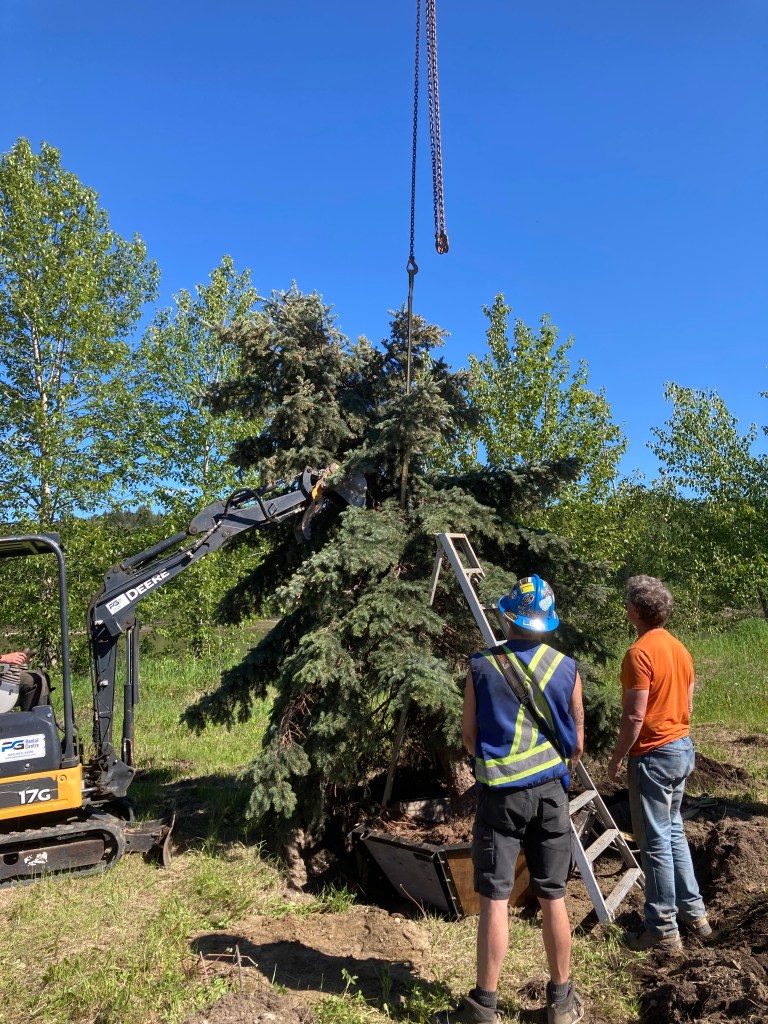
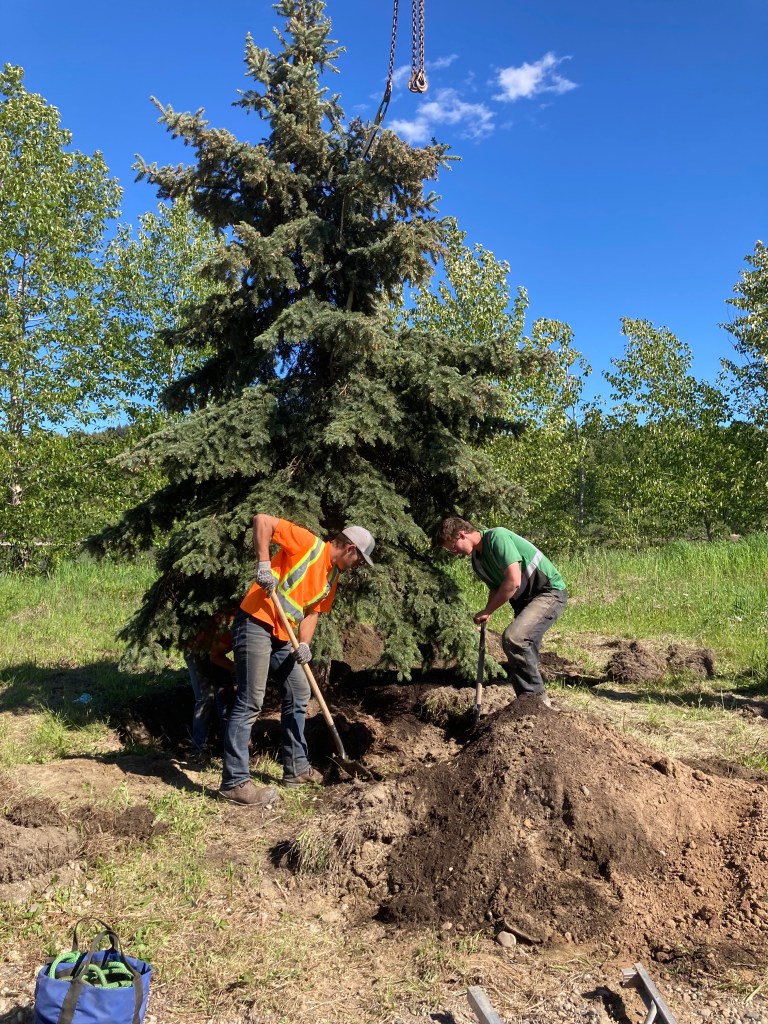
First, the massive excavator they had on-site helpfully built a platform on two sides of the tree for us to work on, and pulled most of the dirt and gravel away from the root ball. Then, it was up to us to shape the root ball with hand shovels, carefully digging and pruning roots as cleanly as possibly to avoid rot. The cage was a hexagonal structure two feet deep, six feet across at the top and four across at the bottom, so there were some pretty precise angles to replicate and lots of measuring before we could fit the cage on over the roots. It went on in six panels, lined with plywood, and then was bolted together at the corners.

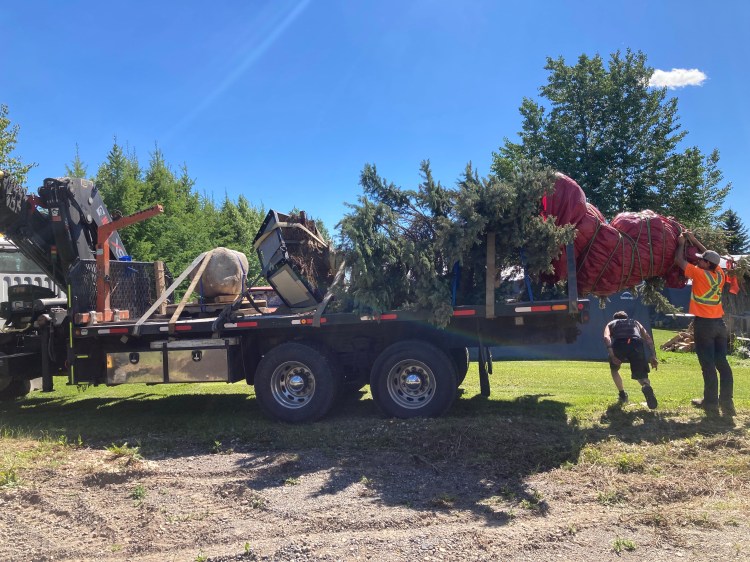
After that, the crane truck arrived. Pretty cool, right? Each side of the tree was lifted slightly off the ground one at a time to get slings under the cage, and then slowly but surely the tree was lifted up and onto the deck of the truck, then laid down to rest on one of the sides of the cage and a sling, kind of like how they transport whales (or at least that’s the connection I made). They wrapped up the top of the tree in a tarp to prepare it for highway speeds and strapped it down to the deck, trying to squish and bend as few branches as possible.

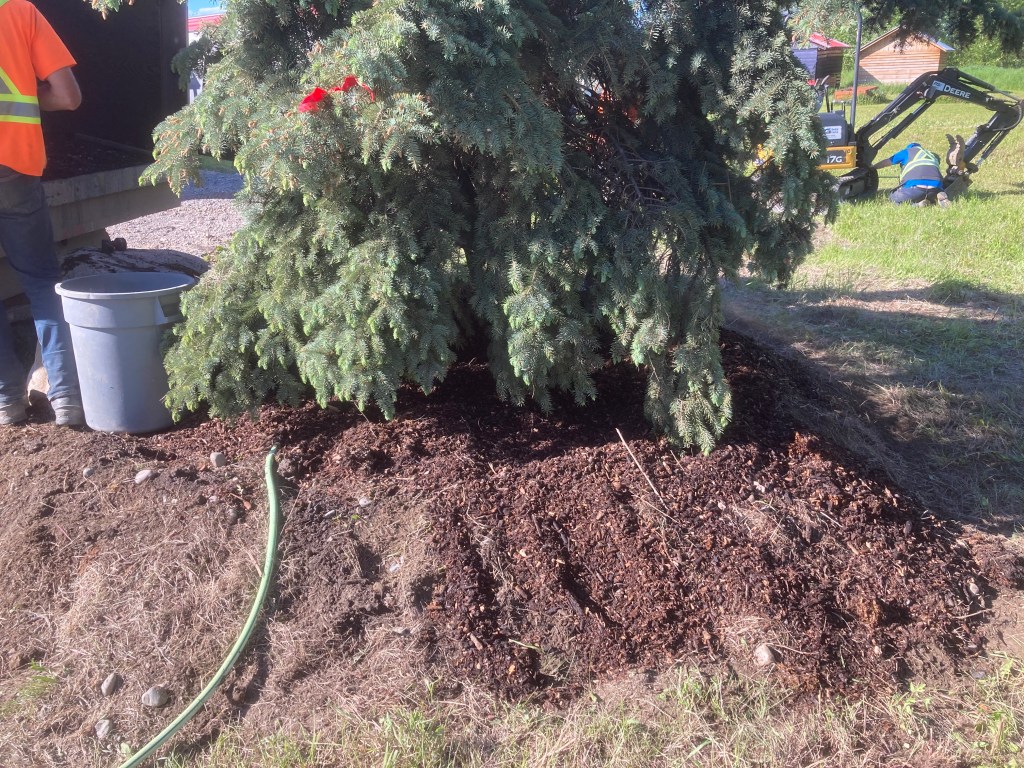
After the half-hour jaunt out to the transplant site in Shelley, it was time to do the whole thing in reverse and get the tree back in the dirt. Once the tree was lifted into the prepared hole, the crane held it up while we shovelled in enough dirt to hold it up, then it was released and the roots were covered with soil amended with beautiful compost from the Prince George Transfer Station. The tree was fertilized while the dirt was going back in, and then the dirt was covered with about 3 inches of partially composted mulch with a soaker hose underneath.

The rock holding the dedication plaque had also come along with the tree, and it was positioned in front as the final icing on the cake. The tree looks pretty happy in its new home!
All settled in in its new location!

Coastal Removals – Feb 19-20, 2024

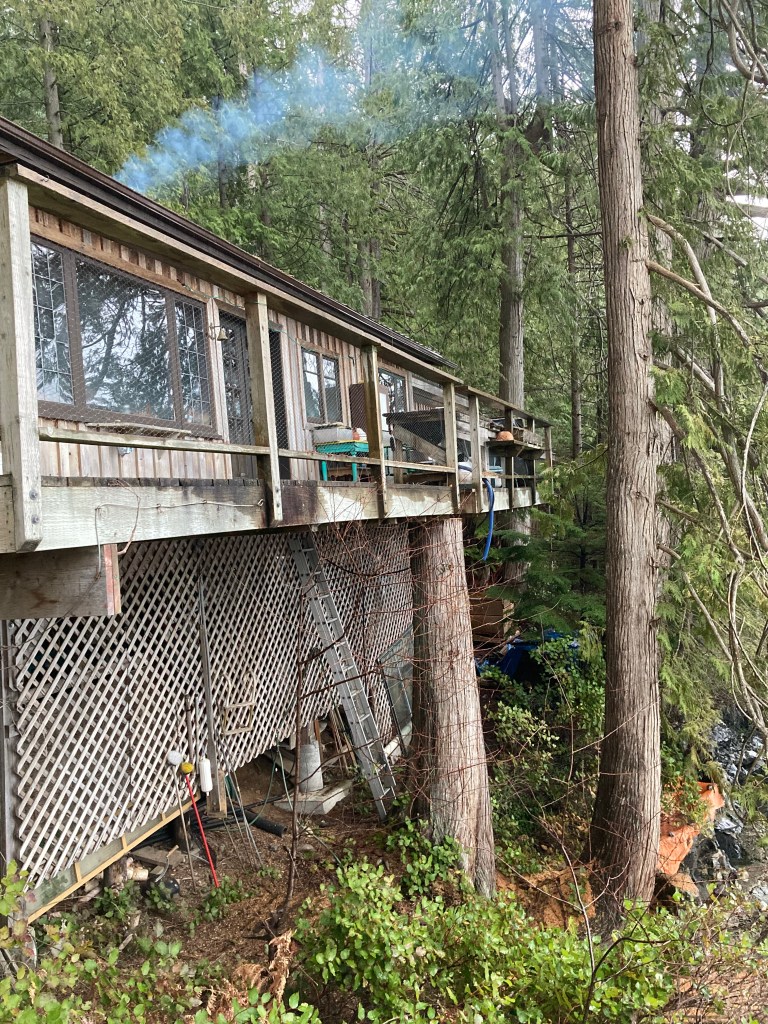
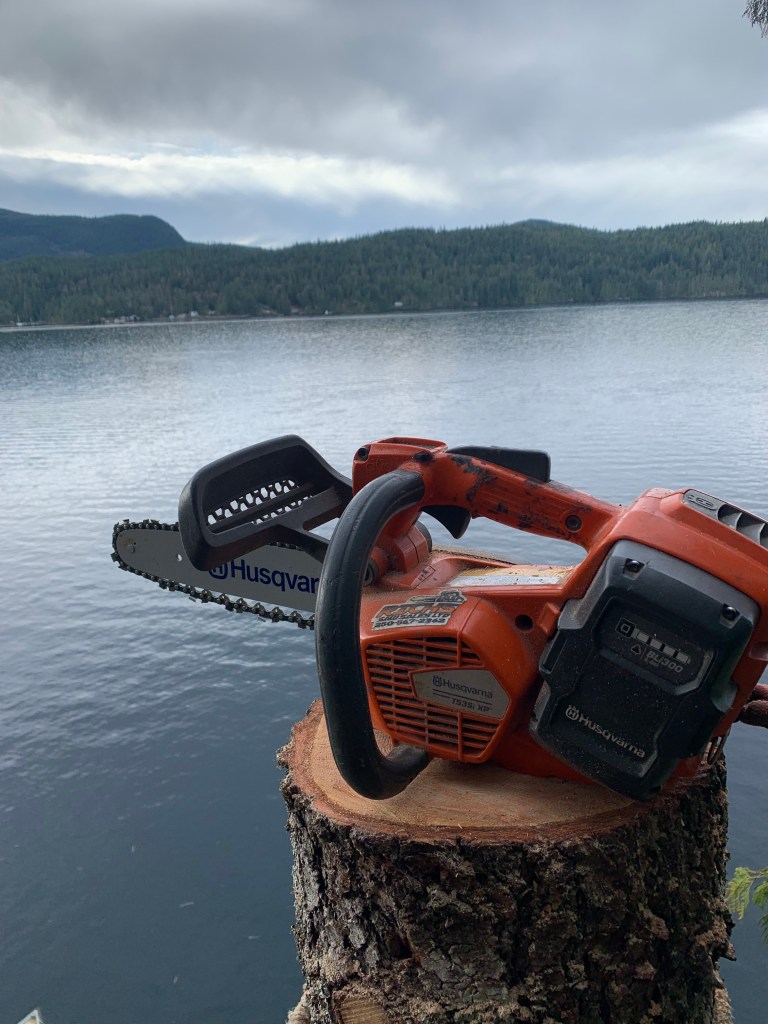
This week, Allan and Jeremy found themselves on BC’s Sunshine Coast, removing two significantly large trees! While we don’t usually operate so far from home, it was incidental to another trip and how nice is it to get to stay at a remote cabin for a couple of days!

First, A Fir

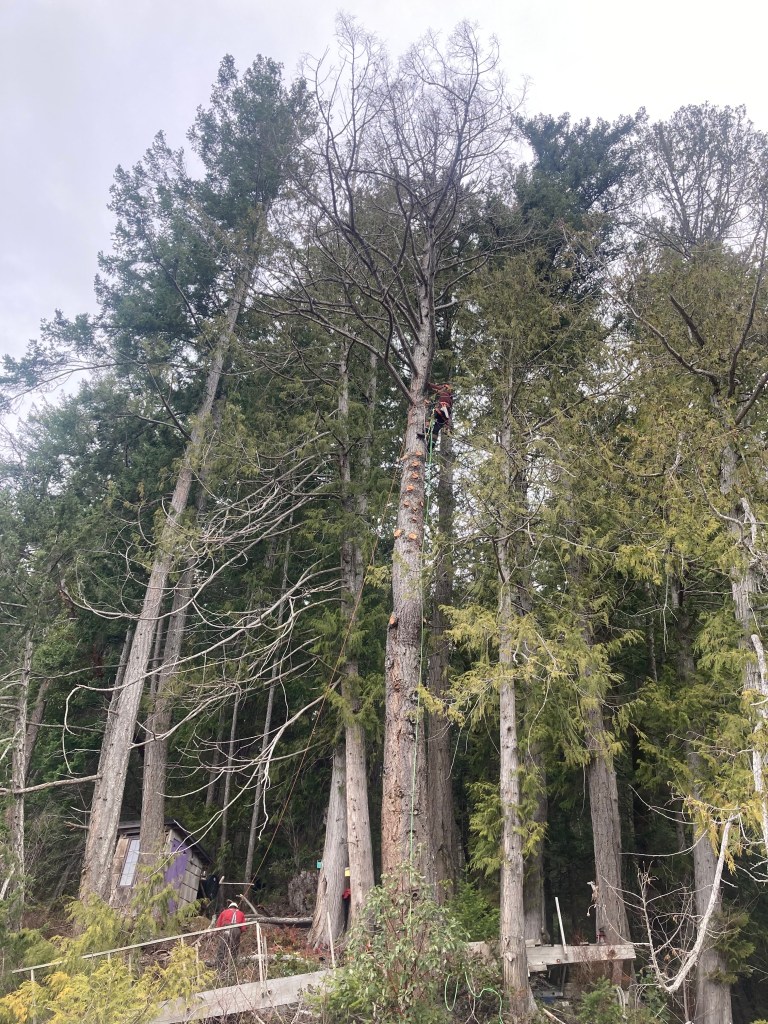
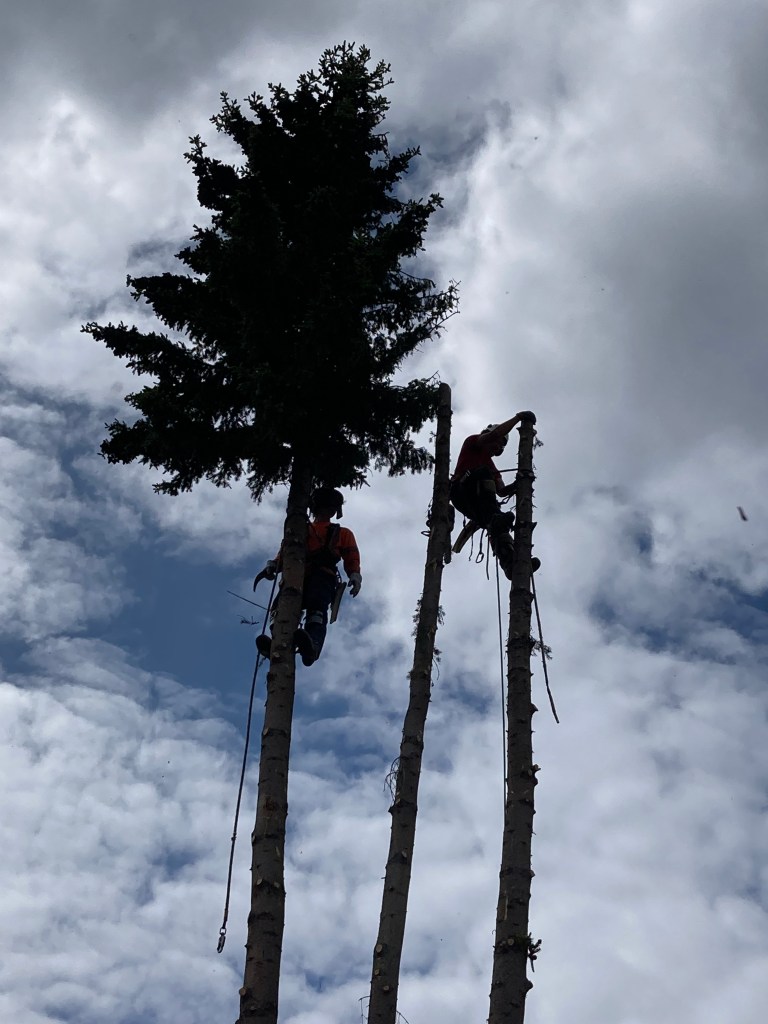
The first tree was a Douglas fir tree, stately in its place looking out over the inlet but causing concern as it was dead and brittle.

Jeremy climbed up the tree, taking off limbs as he went in a standard removal. The tree was about 80 feet tall and 30 inches in diameter, and the top came down with quite a crunch, breaking apart into pieces (see the video below). After the limbs and top were removed, Jeremy took another 8-foot piece of the top of the stem, then climbed back down so Allan could fall the tree back into the forest.

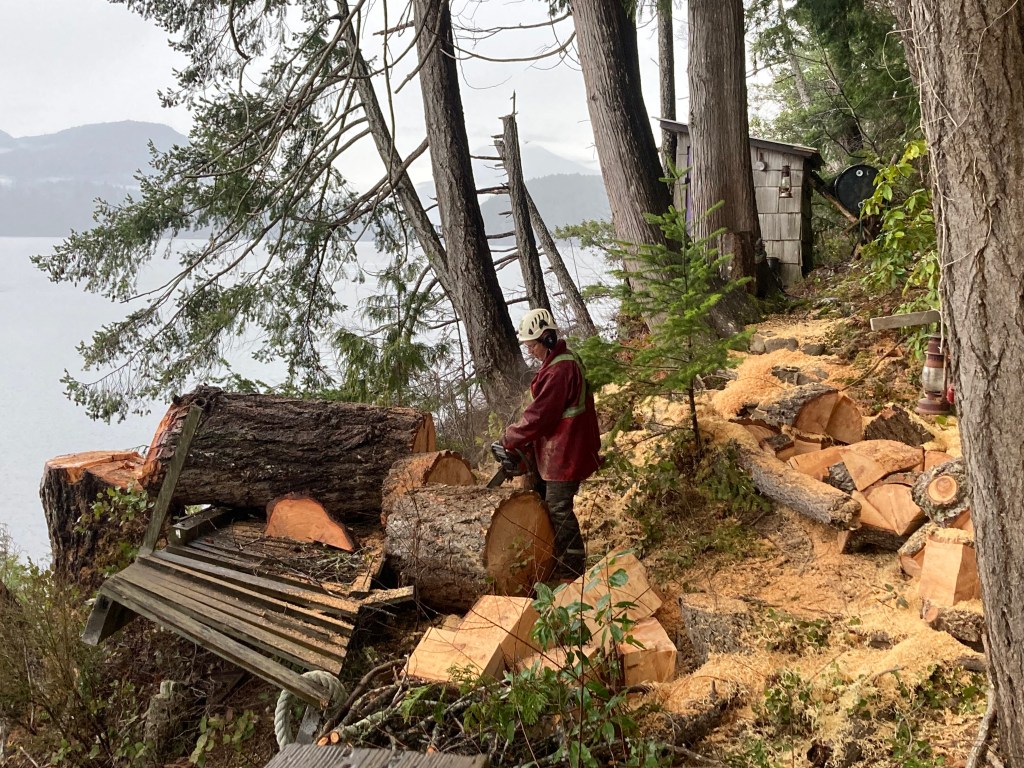
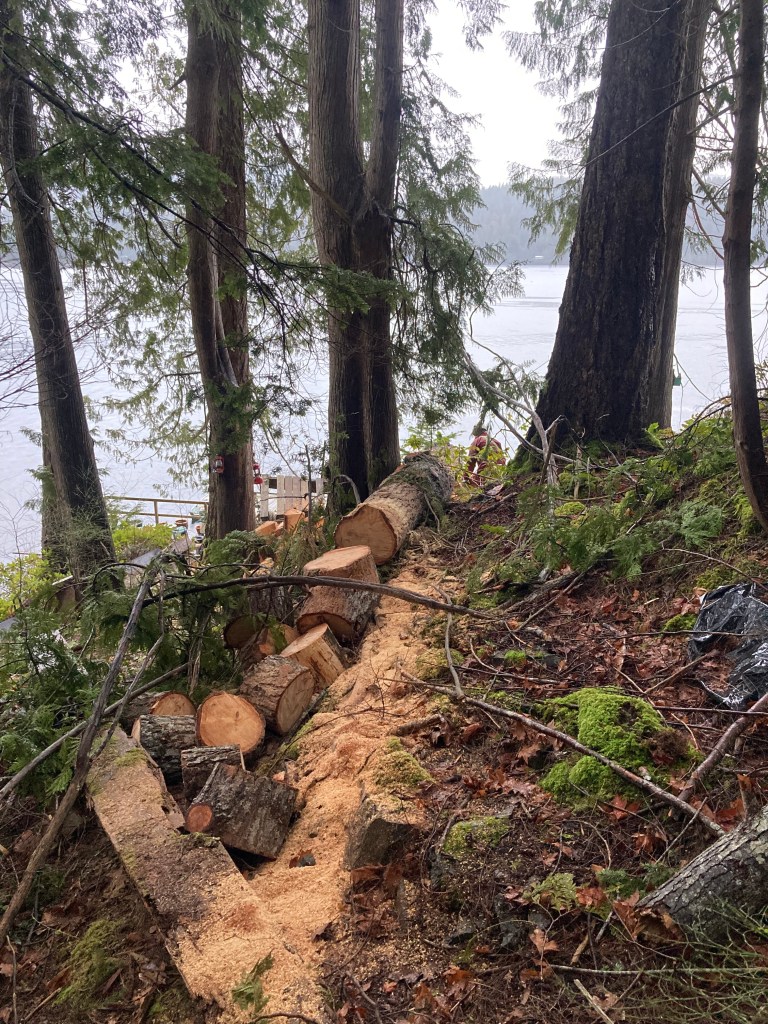
Falling the tree proved challenging—after all, a 30 inch Doug fir is not going down without a fight! Sap drained out of the stem as Allan made his face cut. Jeremy had tied a lead rope to the top of the stem before climbing down which was tied off further up the hill in the forest with Jeremy and the homeowner—a retired arborist himself—ready to pull. Using falling wedges in the backside of the trunk, Allan artfully whittled his way through the stem, finally taking out enough that the whole stem fell, as if in slow motion, precisely into a gap between the surrounding trees. Although it was felled right over the pathway to the outhouse, even the stone stairs were not damaged and a little fir tree that got slightly squished sprung back to life after the trunk was removed.

Once it was on the ground, the tree looked even bigger than it had before it was felled. Allan and Jeremy spent some time bucking the trunk into splittable lengths. Douglas fir makes for good firewood, and at a boat-access cabin without electricity they weren’t about to let it go to waste!
Cedar in the Porch

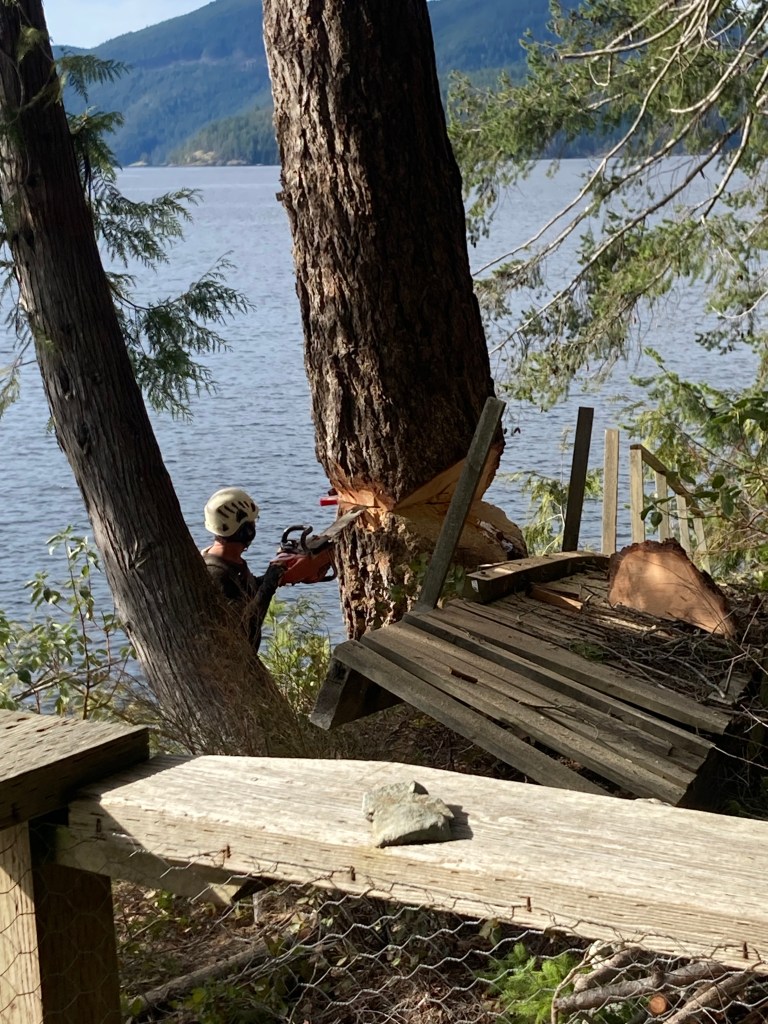
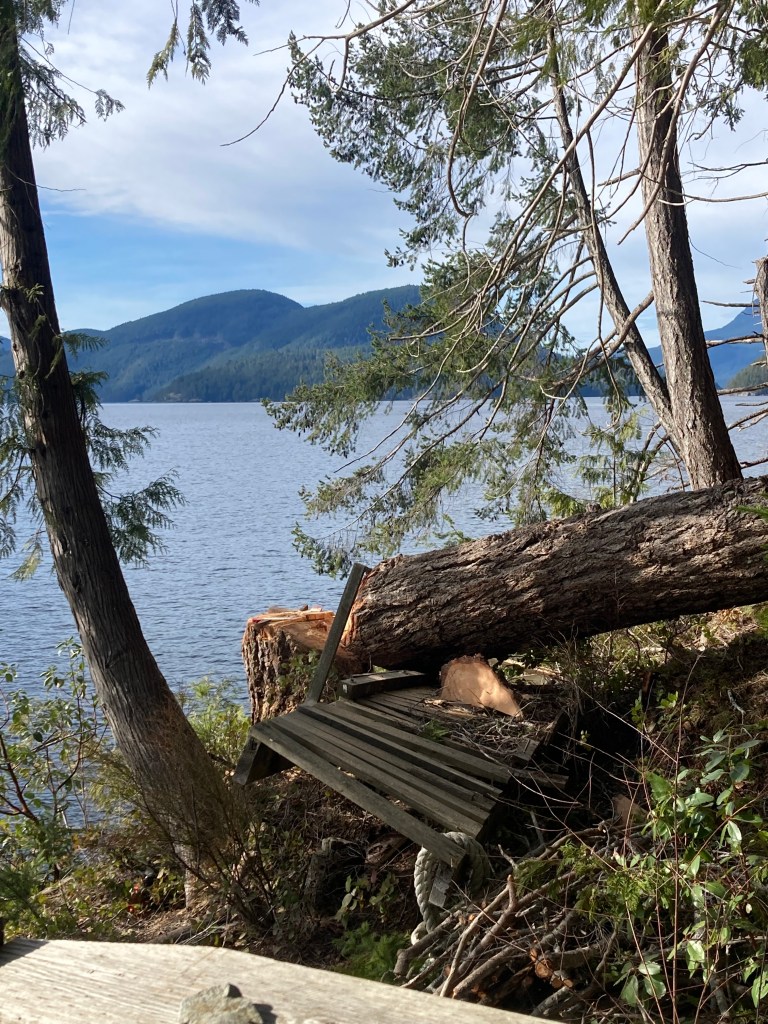
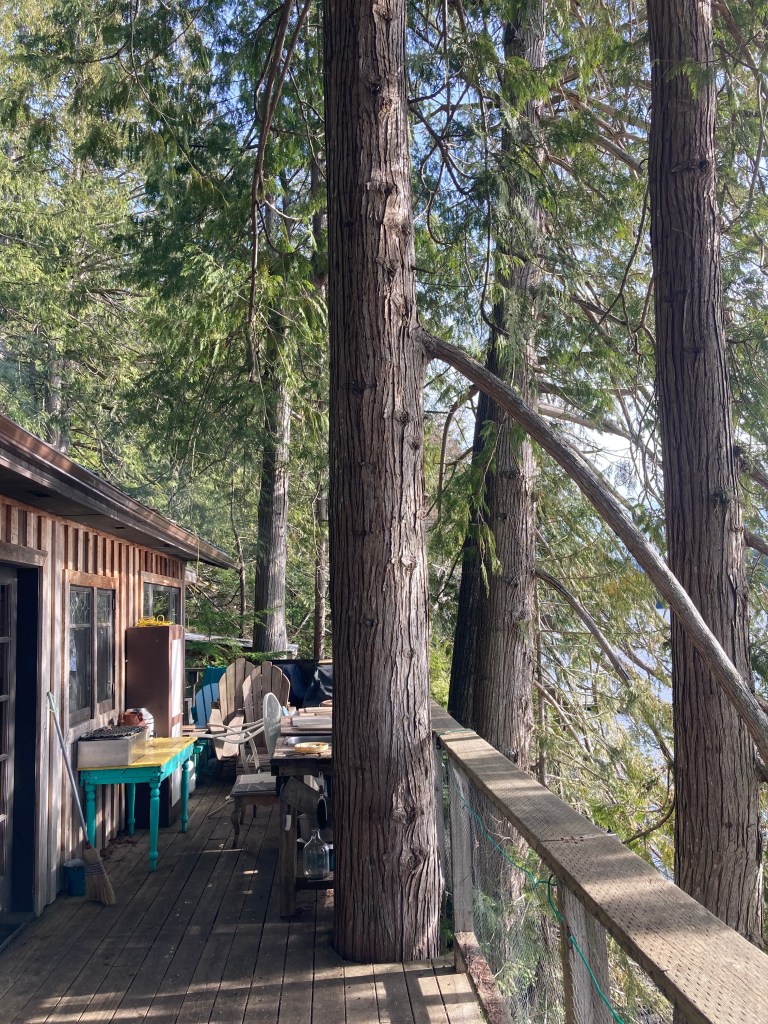
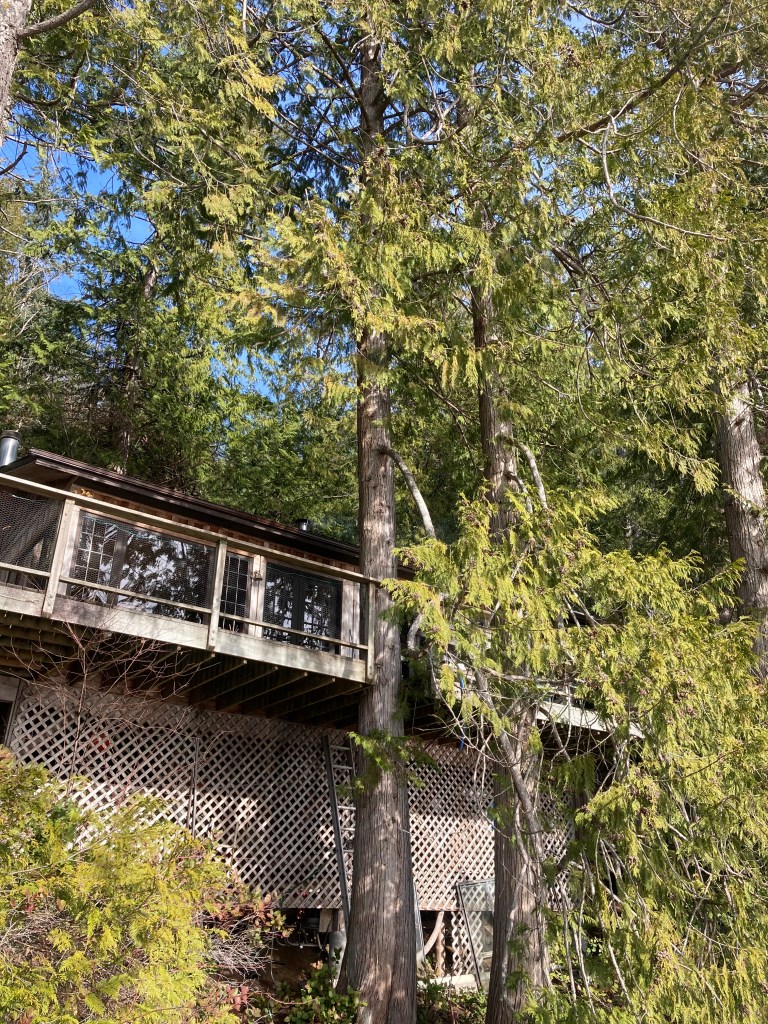
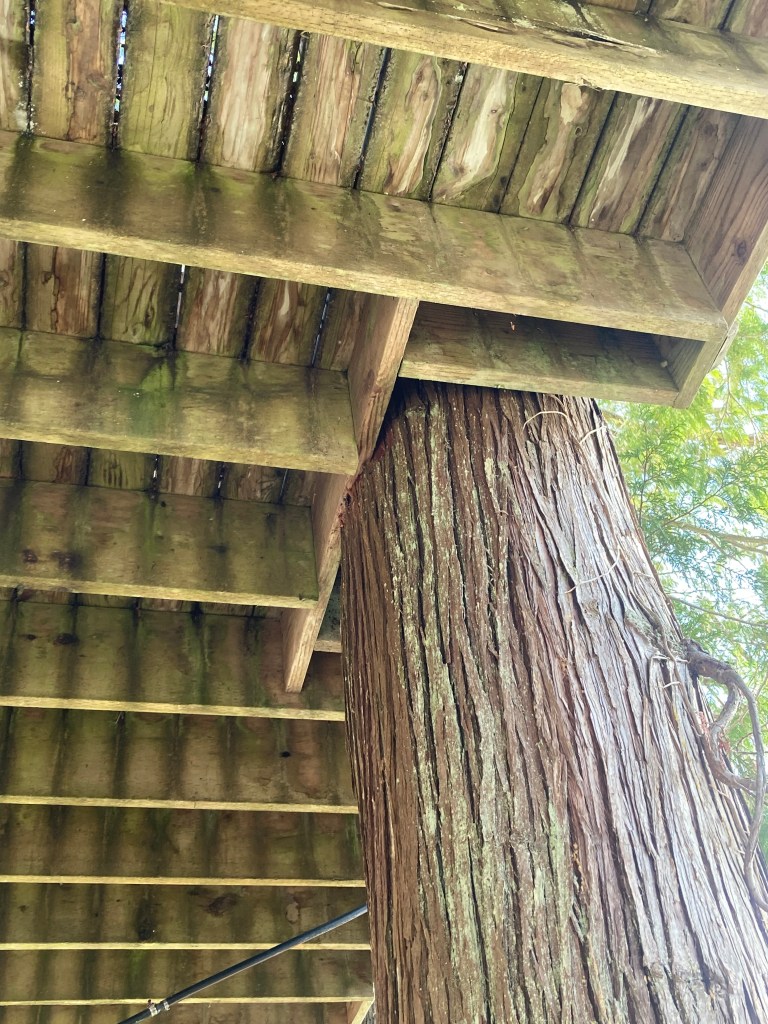
Next, they tackled the other tree. At the time the cabin was built, the porch had been constructed around a cedar tree that was quite a bit smaller then than it is now. Over the years, it had grown into the porch and started to push on the floor joists, knocking the whole cabin a little out of whack.

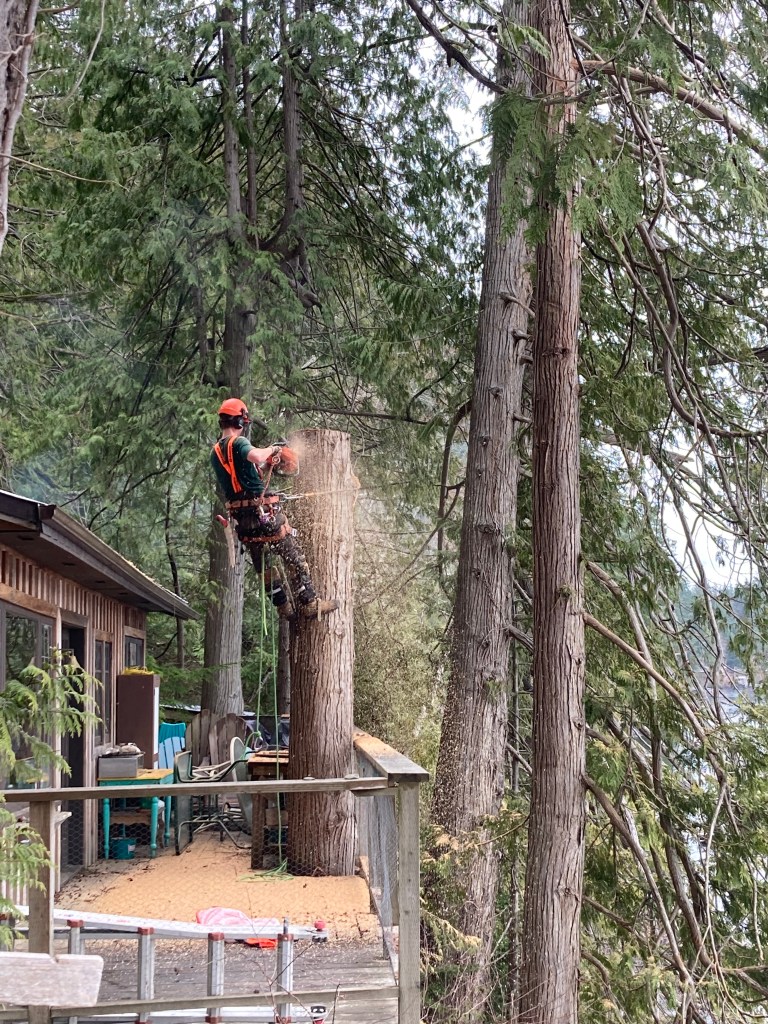
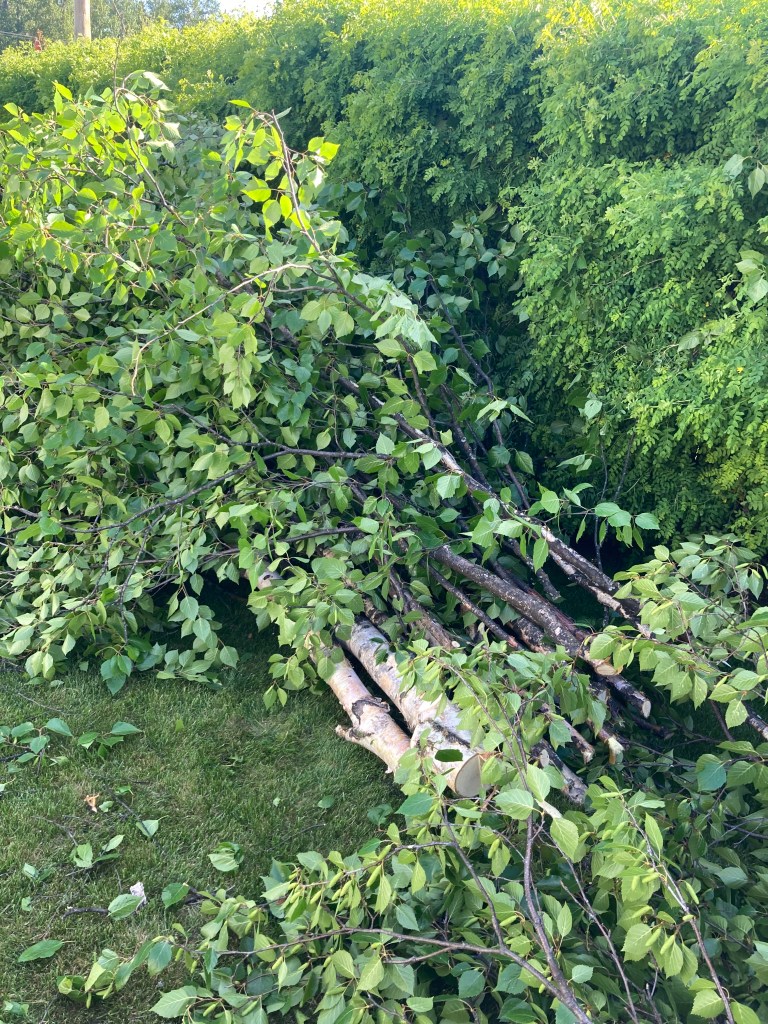
This tree, of course, couldn’t just be felled in one big piece. Instead, the branches were lowered onto the deck and hauled into a pile by Allan while Jeremy scaled the tree, clearing as he went. The cedar had multiple small tops after having been lopped off several years prior, so these were also lowered without too much difficulty to the deck.

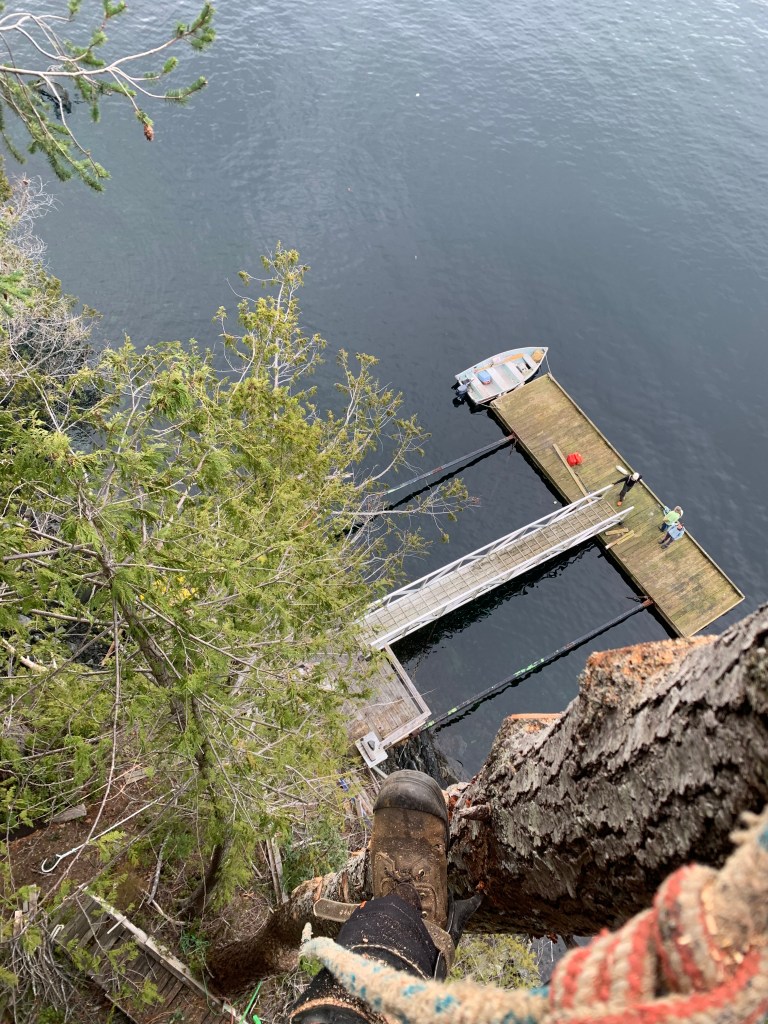
After the top was gone, the strategy had to change—the rounds from the stem were much too large to drop onto the deck without causing damage. Fortunately, in front of the cabin was a small beach; the only thing to avoid was a small set of wooden steps descending to the rocks below. Skilfully, Jeremy directed each round to fall on the rocky beach, missing the stairs entirely. They continued removing the rounds until the top of the trunk was below the floor joists, then left the rest of it. Another successful removal!
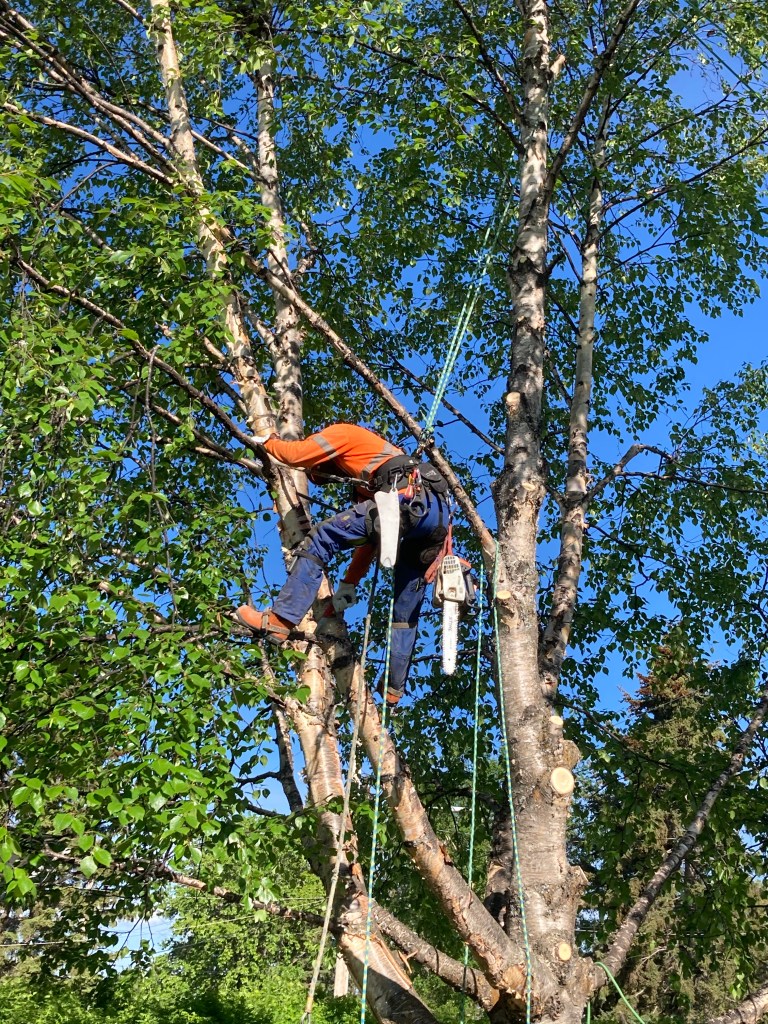
Jeremy, from the top of the tree, took some photos and videos to give another perspective. Take a look at that view!

May Tree Reduction – June 6, 2023

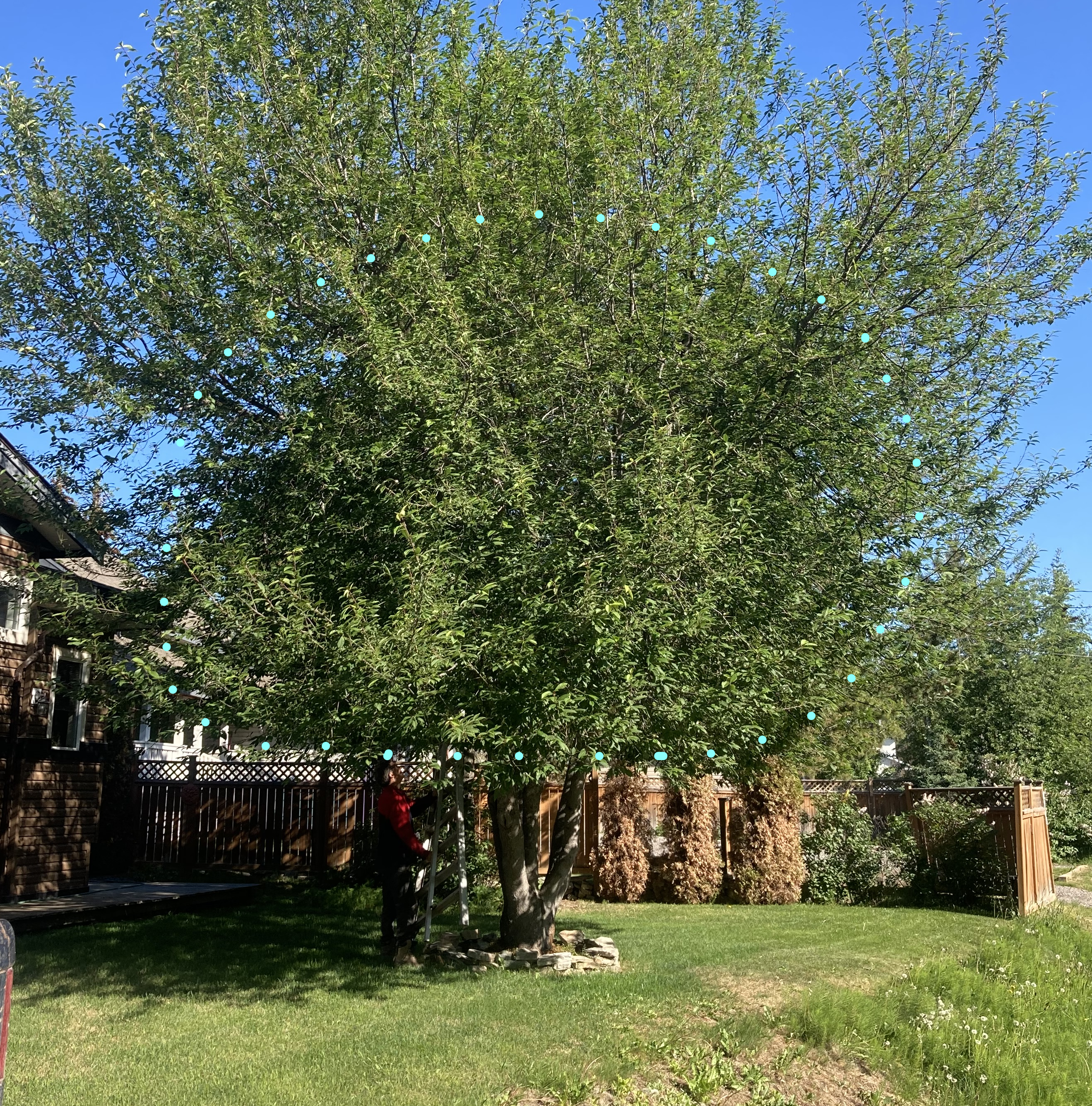
Sometimes you get a chance to do some very satisfying pruning, and this was one of those jobs! We were asked to prune back and reshape a beautiful, vigorous May tree (Prunus virginiana), the main feature of a lovely shaded front yard. The tree was in excellent health but it had started to grow too large and a bit ungainly, so Allan was called in to reshape it and bring it back to a manageable size. He aimed for at least a 30% crown reduction, a round shape, and a bit more clearance underneath the tree.

Crown reduction is the preferred method for reducing the size of a deciduous tree such as the May tree. Instead of just lopping off the ends of branches, which can cause unwanted lateral growth, codominant stems, or bare sticks towards the trunk, a crown reduction aims to promote future growth in a desirable way, working with the natural shape of the tree while encouraging it to fit the space it’s growing in. Efforts are made to make sure the tree is balanced immediately following the reduction and in the future.

Crown reduction aims to maintain the natural shape and growth pattern of the tree by selectively pruning branches to reduce the size of the tree
Photo courtesy of ArborCare: https://www.arborcareaz.com/tree-trimming-pruning/tree-crown-reduction/

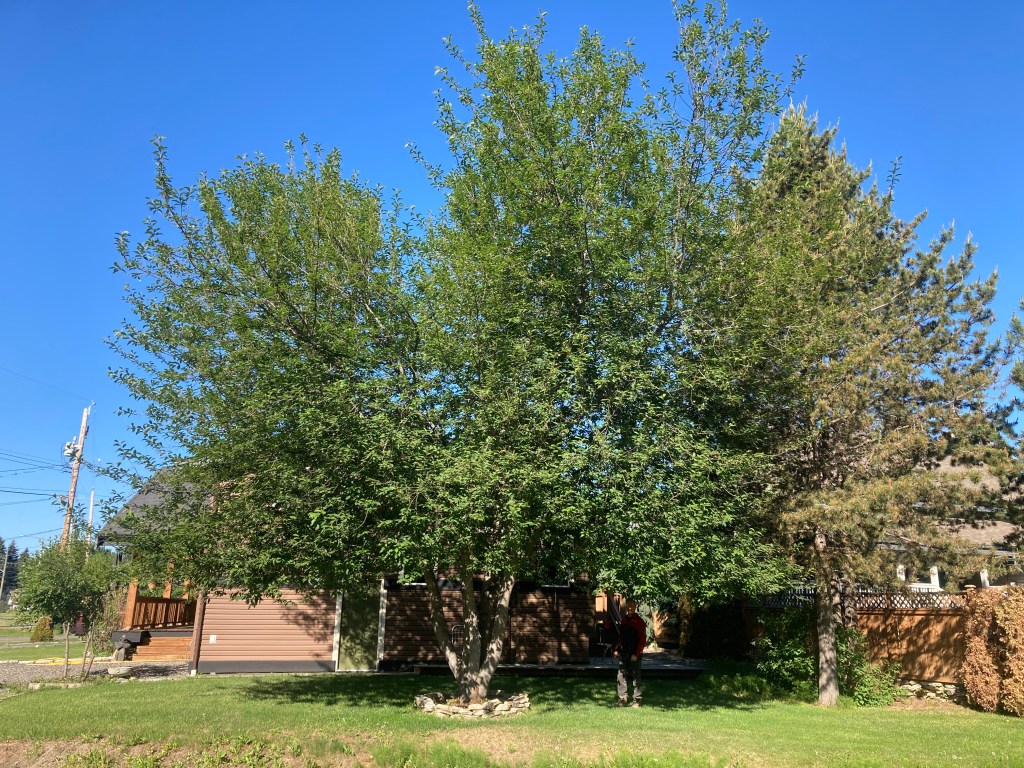
The May tree was taking over the entire side lawn and brushing up against the house. It had also grown into the branches of a pine tree towards the neighbour’s fence and it was choking it out because of the lack of light. It was time to do some pruning!

The May tree before the crown reduction, sprawling over the lawn and dwarfing the pine tree

Allan started out by removing some of the larger branches that had lots of ends sticking out of the top, contributing to the lopsided appearance of the tree. He climbed between the stems, using a chainsaw to start bringing his vision of a more contained tree to reality.

It looked pretty wacky halfway through, but you just have to trust the process!

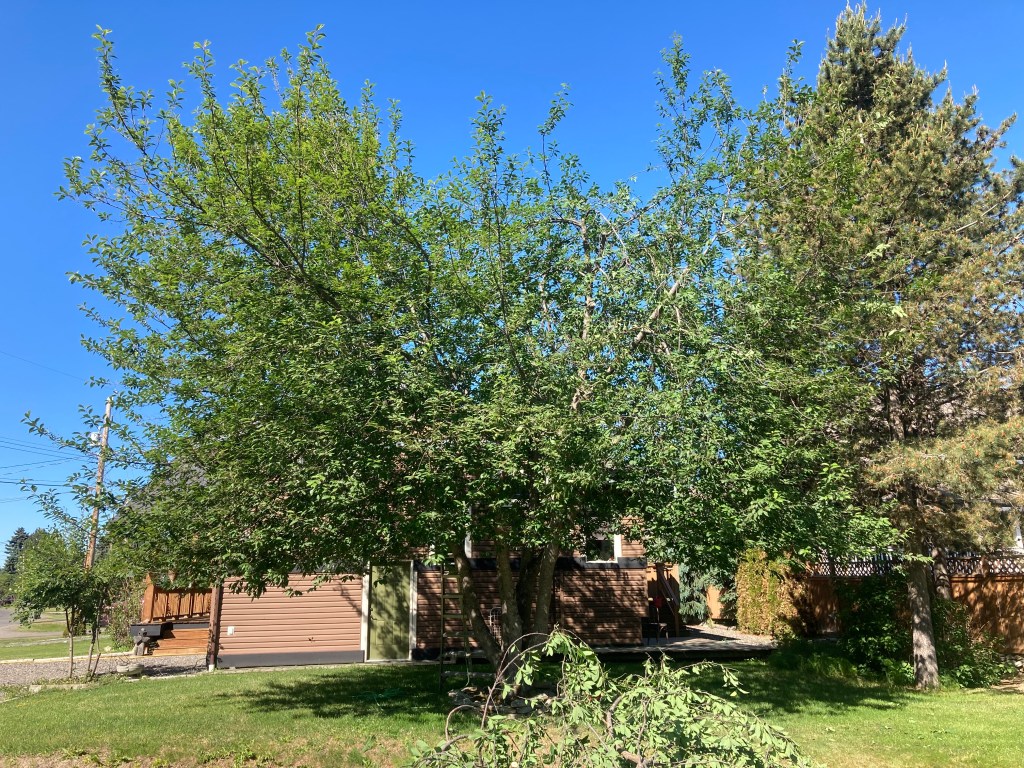
After the larger branches had been dealt with, he used a pole pruner to remove smaller branches to further refine the shape of the tree, moving around the outside and carefully considering each removal. Finally, the reduction was done, and you’d hardly recognize the tree! Where it was uncontrolled and sprawling before, it was now rounded and contained, with the remaining branches well-distributed through the crown and lots of room for airflow and new growth. Even the client said it looked like something out of a picture book!

Before and after, with the approximate shape of the reduced crown drawn onto the first image

Birch Pruning Update

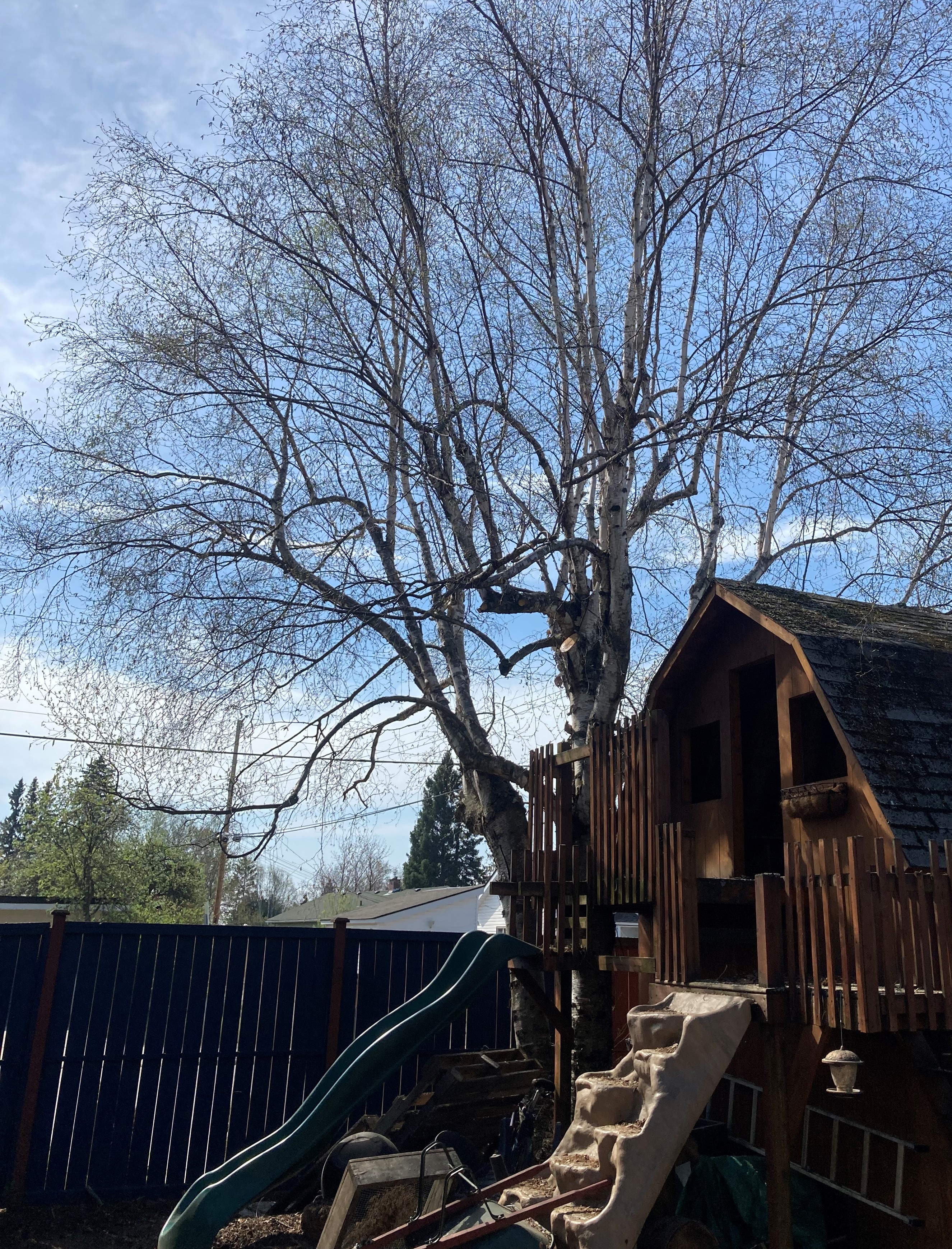
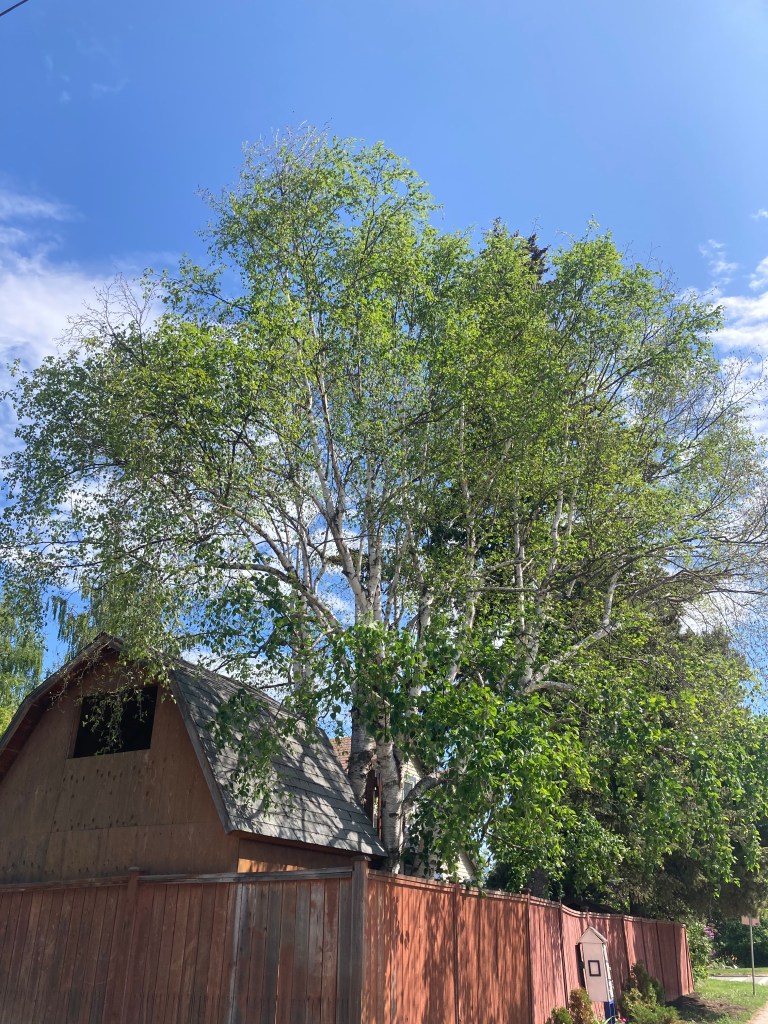
Our first post included a birch pruning and removal in Prince George, and last week I went back to check in on how the tree we pruned was doing. It overlooks a beautiful backyard garden and a little free library beside the sidewalk, and it’s nestled up against a quaint barn-shaped treehouse.

When pruning the tree, Allan removed dead and twisted branches, clearing out the centre of the tree. This kind of selective pruning can increase airflow to the inner leaves of the tree and encourage it to grow foliage closer to the trunk instead of only on the outside of a big ball of crossed, bare branches, overall contributing to a more attractive and healthier tree.

The birch tree before and after pruning

It’s gratifying to go back and see the result of our work!

Busy Day in FSJ – May 31, 2023

On Wednesday, we headed out to Fort St. James for a full day of tree work. It was a beautiful day–sunny but not too hot with a nice breeze.

Job #1

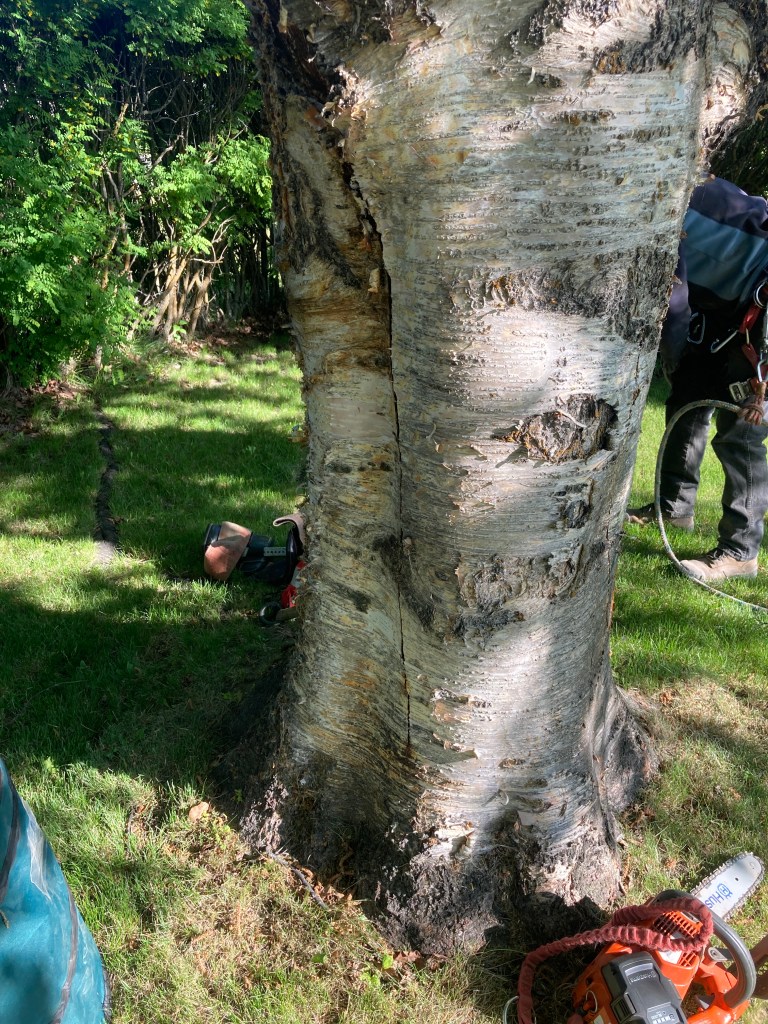
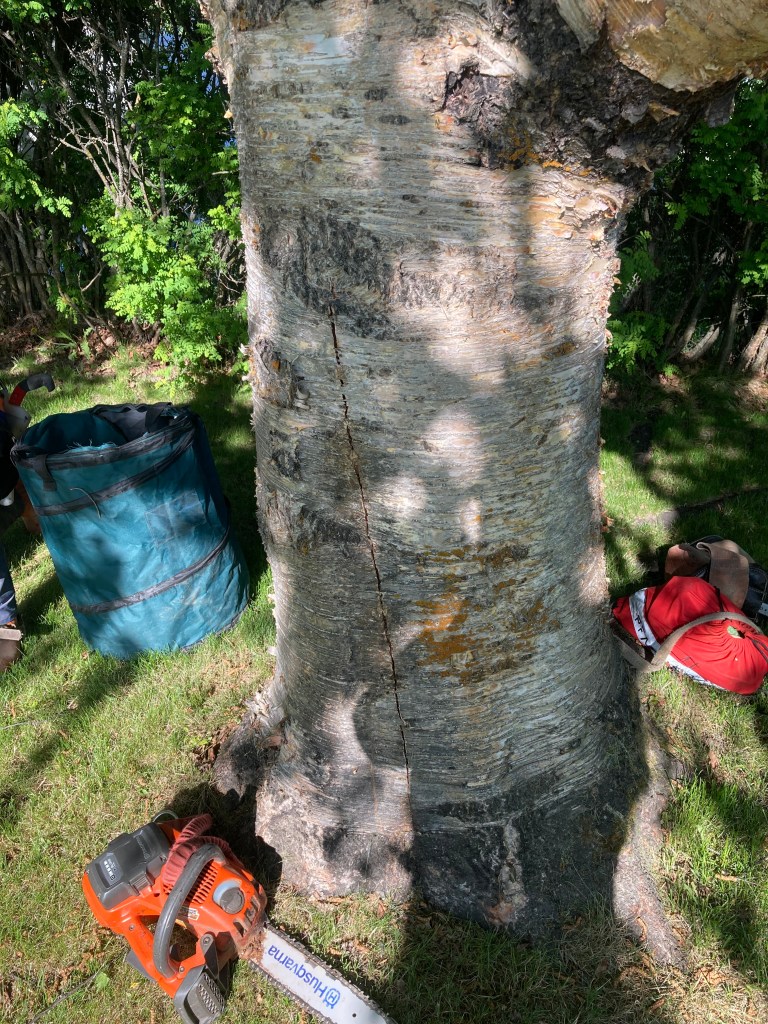
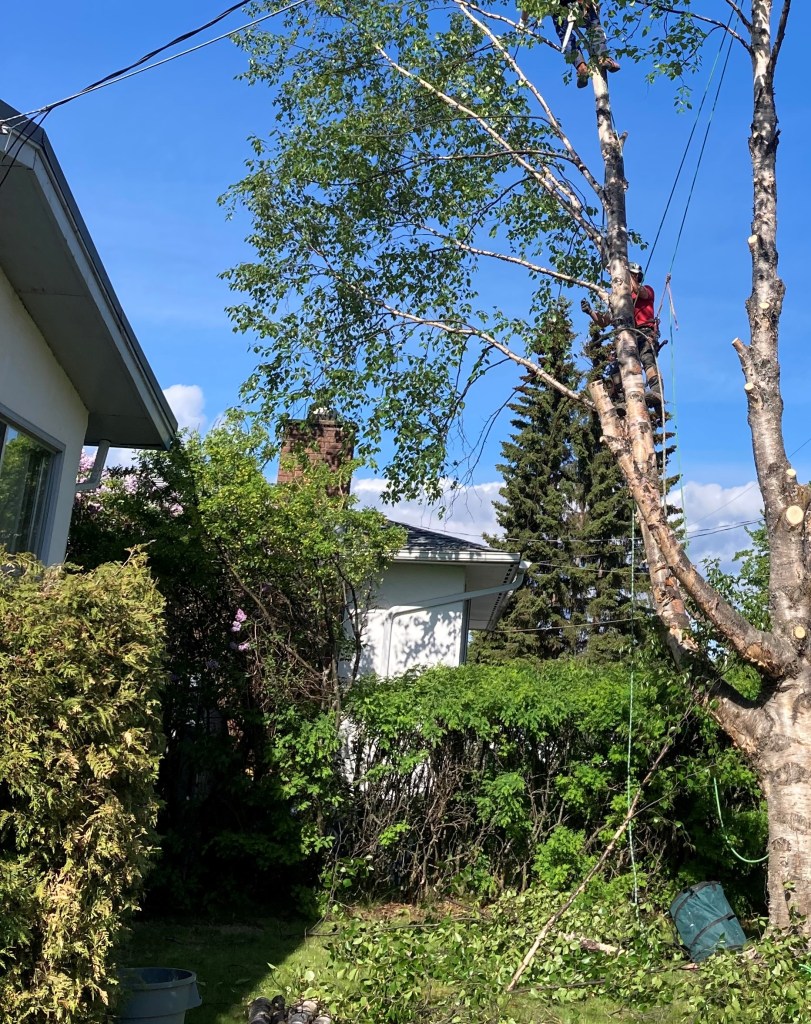
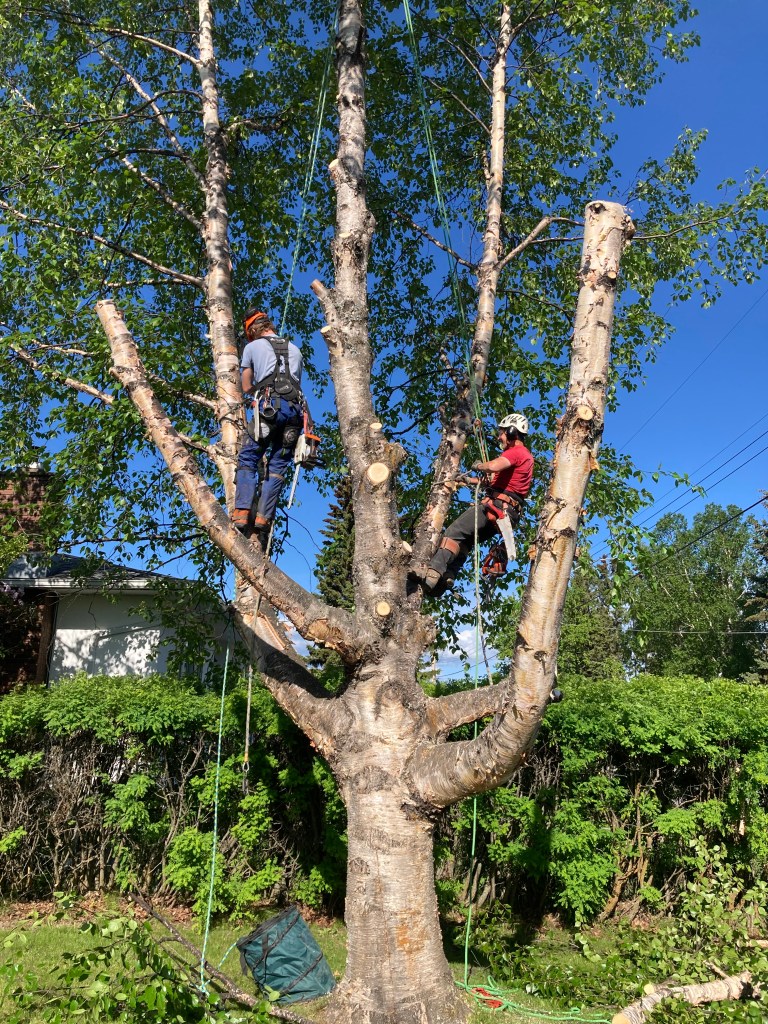
We started out the day in a backyard with a lovely enclosing hedge and lawn. It was a large spreading birch tree with a few frost cracks, growing close to both the client’s and the next door neighbour’s house, as well as power and phone lines.

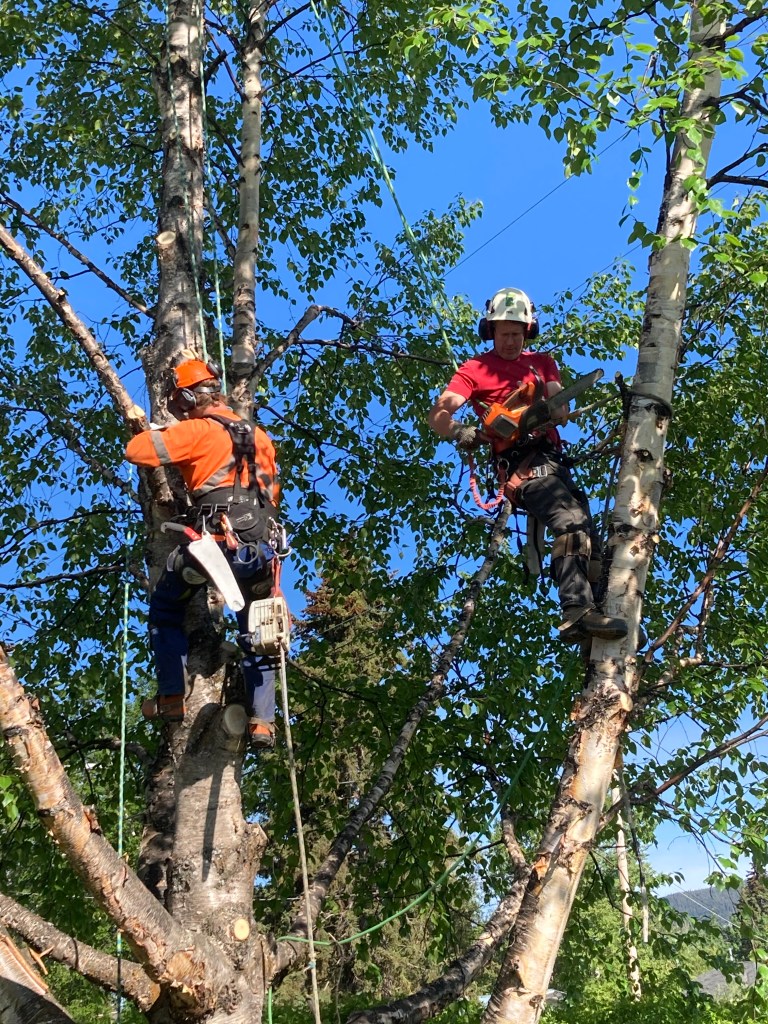
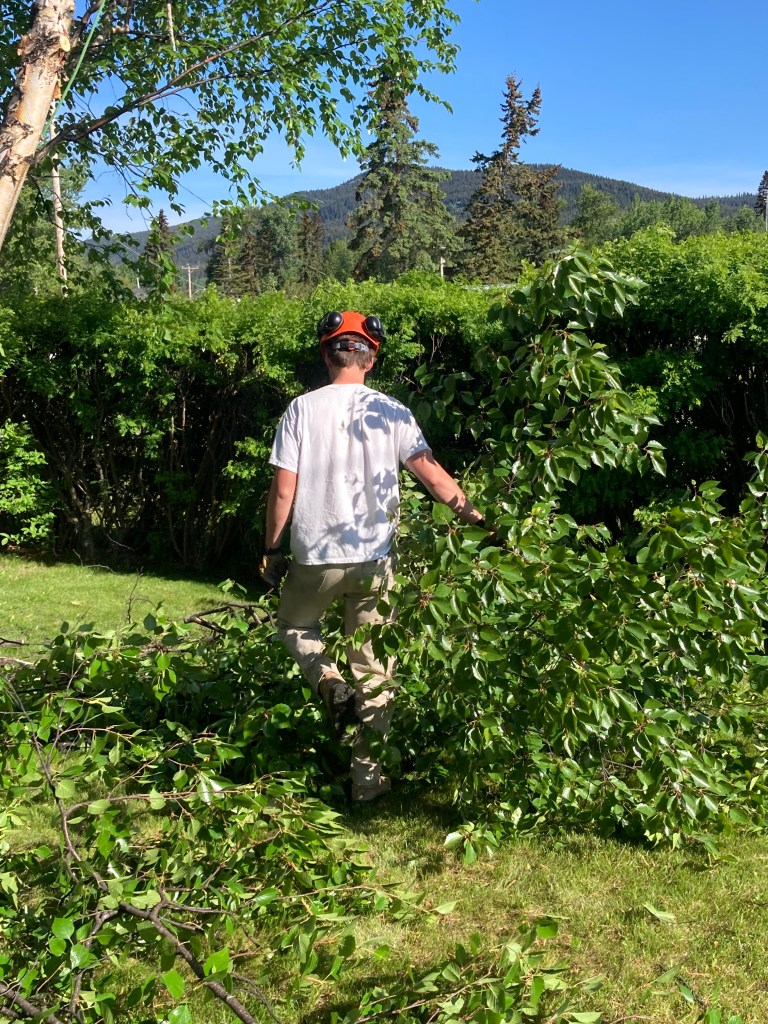
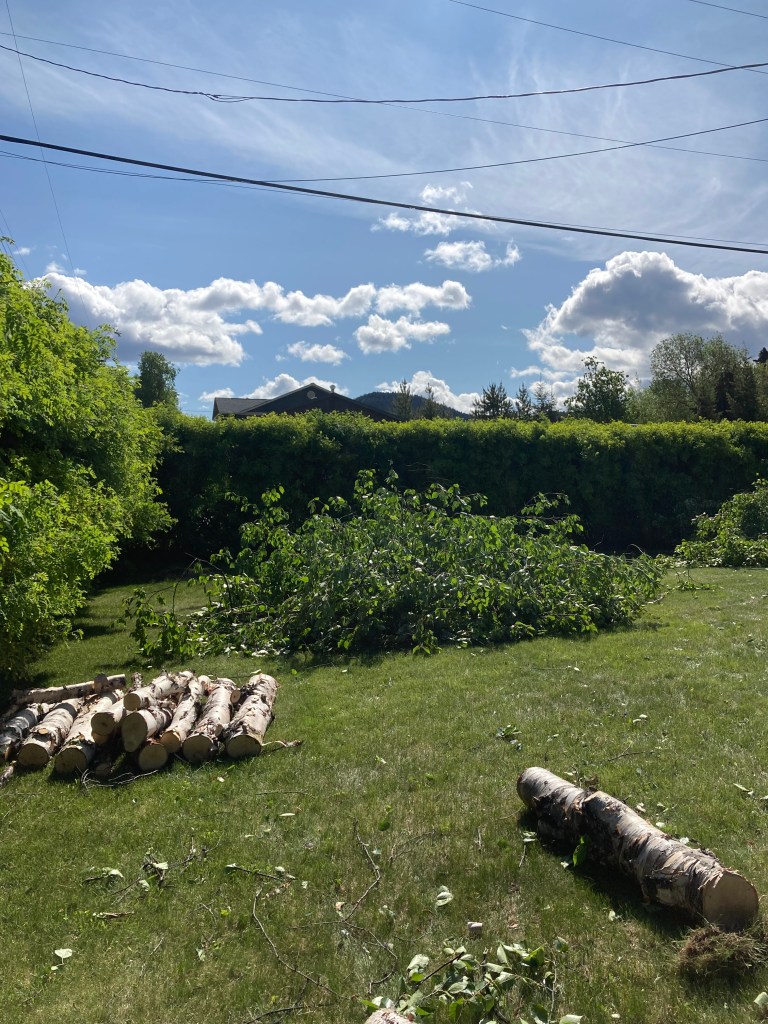
In a small space, it’s important to have full control of branches coming down from the tree. Allan and Tim were especially careful when lowering the larger tops of the multiple stems, which Jeremy and I stacked neatly along with the rest of the brush in the yard for the client to haul away.

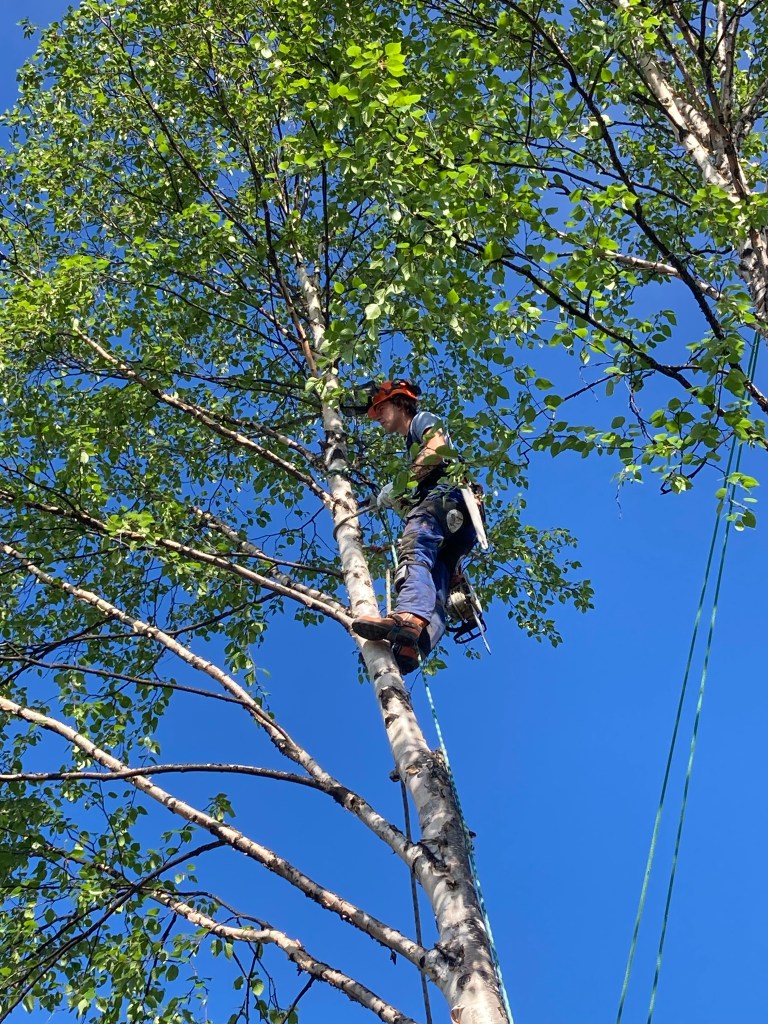
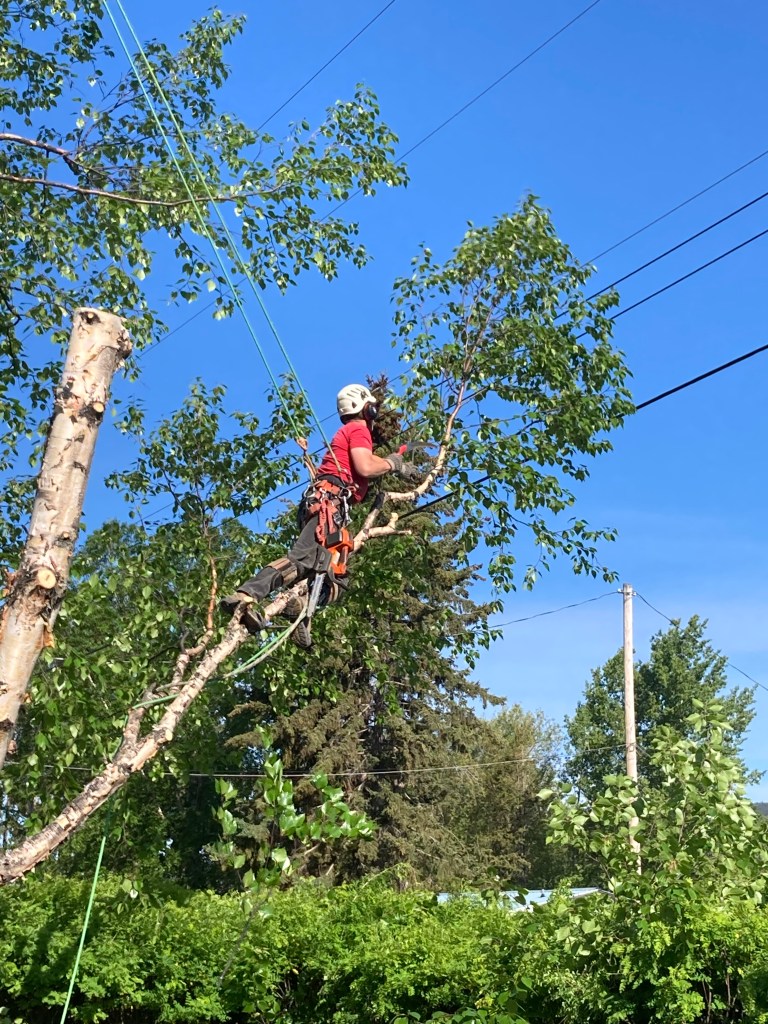
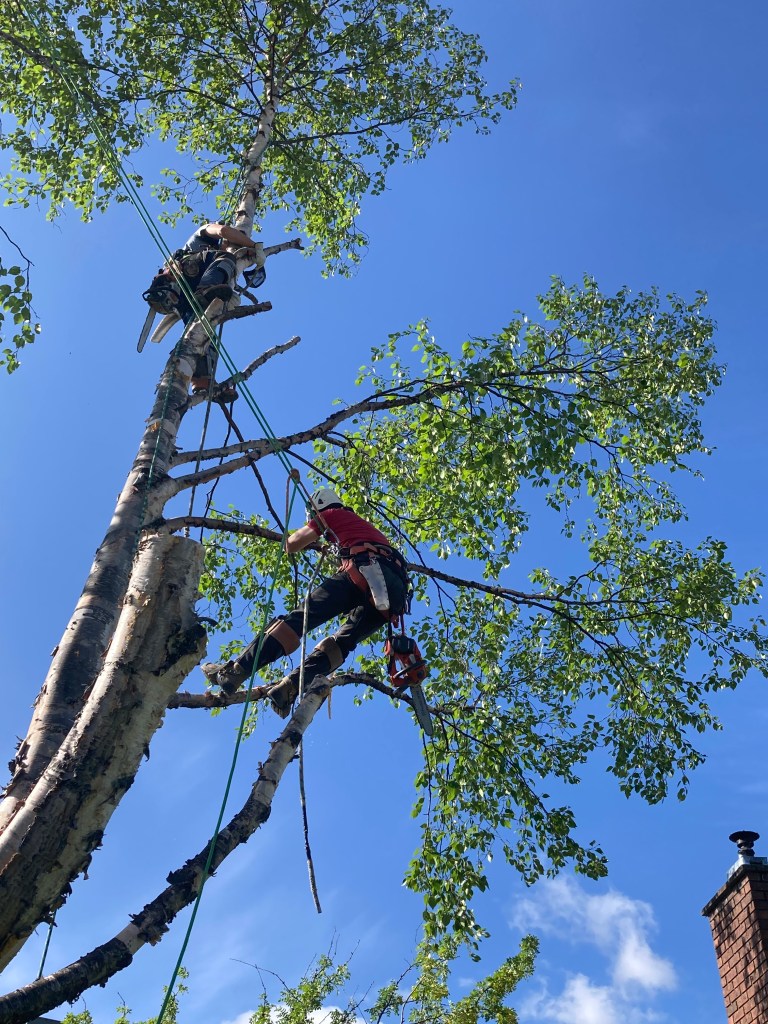
Because of the interesting shape of the birch tree, it was a bit of a puzzle to get all the branches off with a minimum of climbing up and down stems. Allan and Tim had to be a bit creative–good thing they’re flexible!

To bring down the top of the house-side stem safely, Tim used a strategy called rigging, attaching a rope to the stem above the cut line and using a lower branch stub as a pivot to catch the top and allow Jeremy to lower it carefully to the ground.

Tim rigging the top of one of the stems with Jeremy’s help on the ground

Job #2

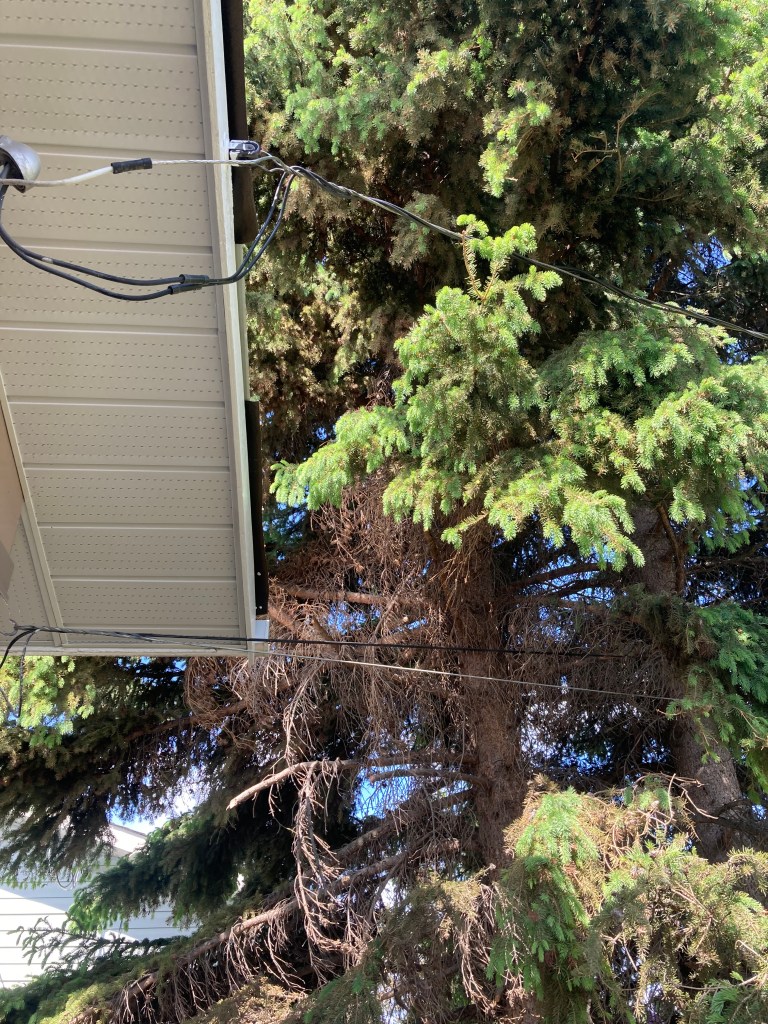
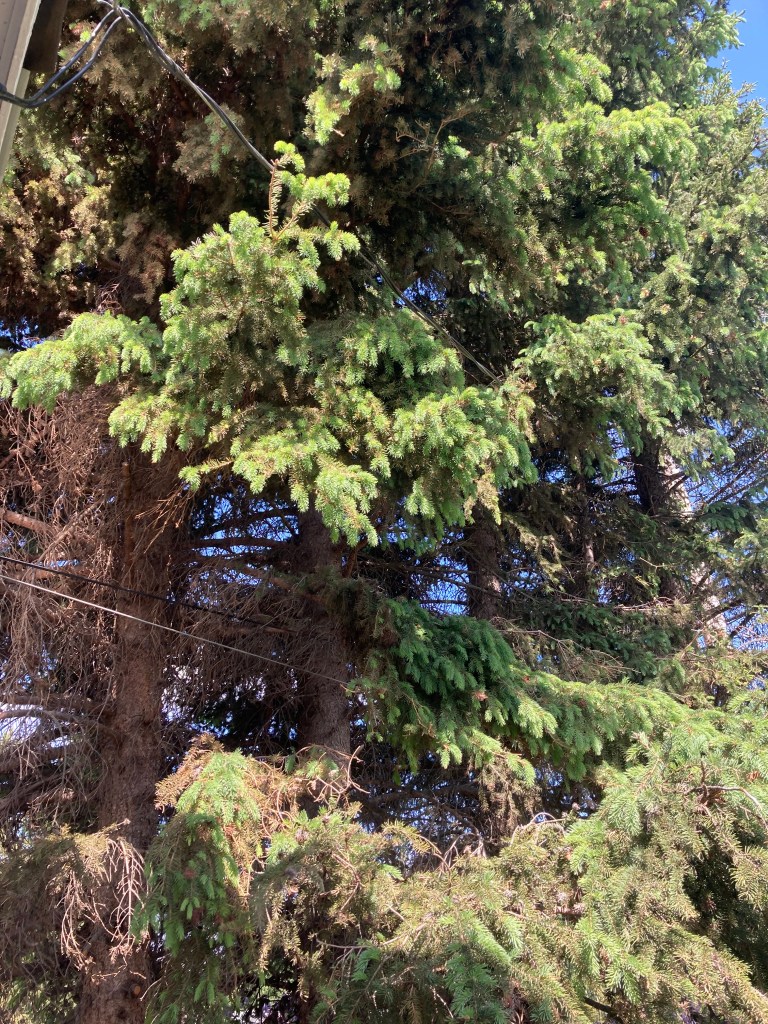
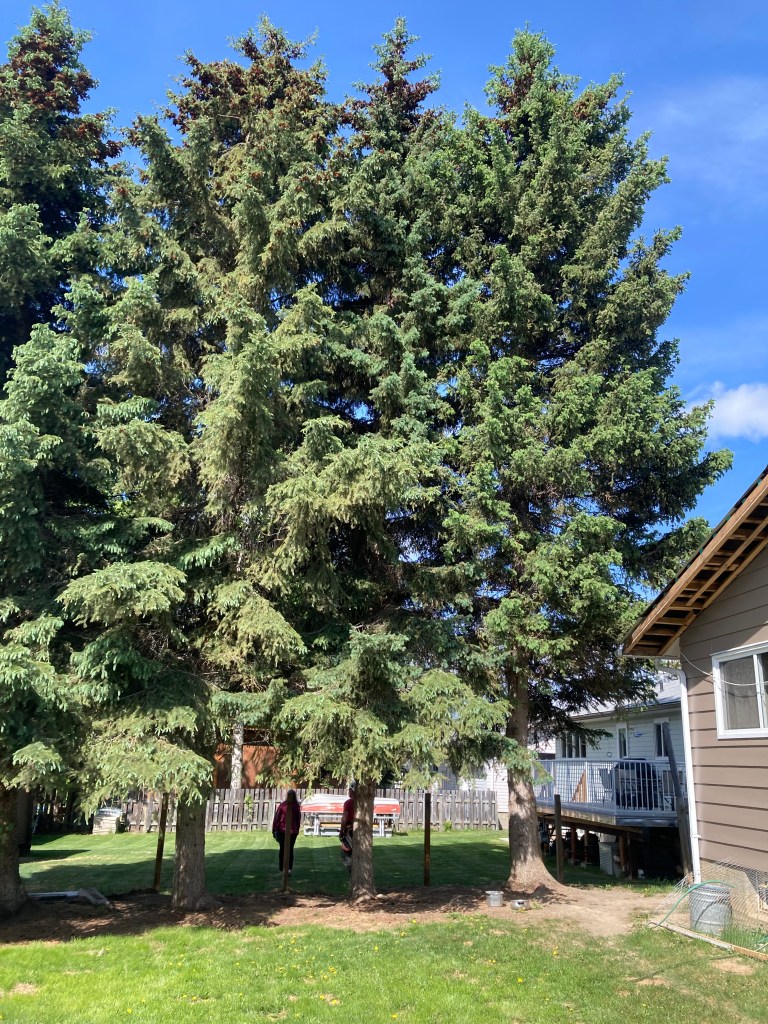
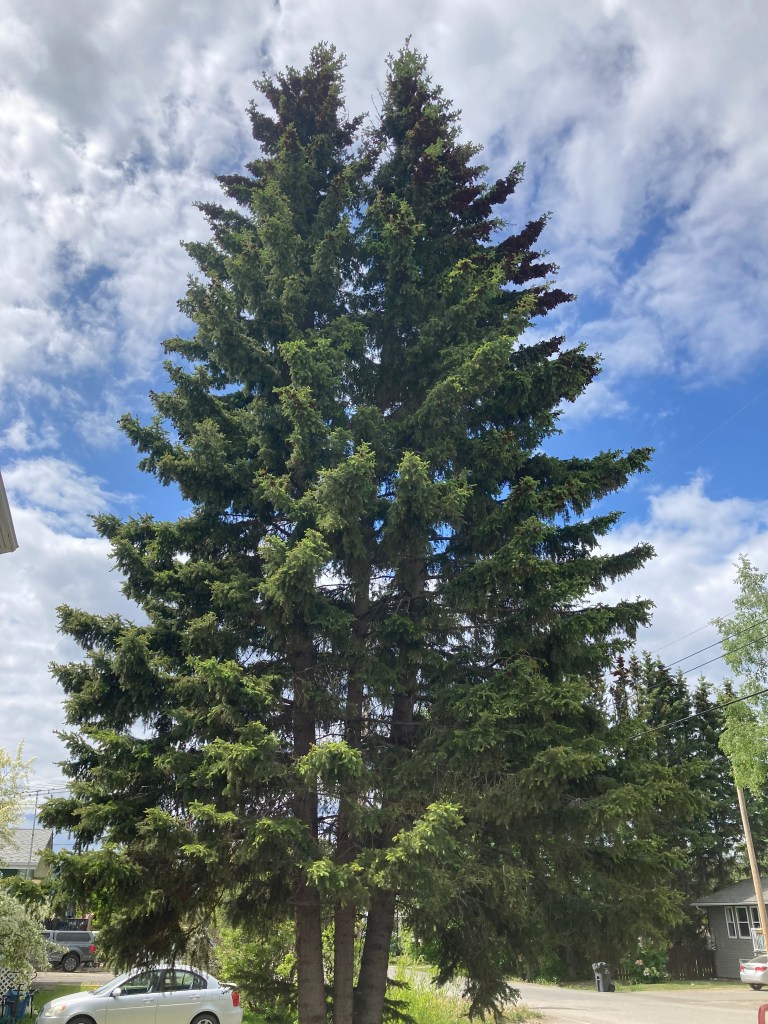
Next, we moved on down the block to remove a few spruce trees tied up in the phone lines. The trees had grown in around the lines and their growth was putting pressure on the cables. We removed all the trees in the group except for one central spruce with two codominant stems, from which Allan and Tim removed dead branches and pruned the boughs that grew close to the lines.

We chipped all the brush from the removals, creating a whole load of fragrant spruce chips. It was important to be very careful of the lines, so branches were dropped straight down beside the trunk or aimed over the line towards the chipper. For the tops, Tim, Allan, and Jeremy used a very neat technique called speed-lining–basically you send the top down a zipline!

Using speed-lining to avoid the power and phone lines

Afterwards, we moved to the backyard to remove one tree from a row of spruce between the client’s yard and her neighbour’s. It was also encroaching on the house. Jeremy went up the tree and efficiently removed the branches moving up the tree; then, he removed the top and cut the stem off in blocks on his way back down.

Job #3

While we were at the first job, a neighbour down the street had requested that we remove one of their trees if we had time, so we headed back over to do just that. It was a three-stemmed spruce in the front yard that was inhibiting the growth of grass on the lawn and dropping many cones every year. It was a routine removal and within a couple hours of arriving it was like we were never there–except the tree was gone, of course!