Construction for a new parkade at the BC Cancer Center for the North was going well–a big pit in the ground and workers and machinery busy all over. Except for one thing… a 20-foot spruce tree, planted twelve years ago by Lheidli T’enneh First Nation to recognize the provincial health services. Of course, no one wanted to rip it out and throw it away unceremoniously, so it was decided that it would need to be moved, alive. Enter, Whispering Boughs!
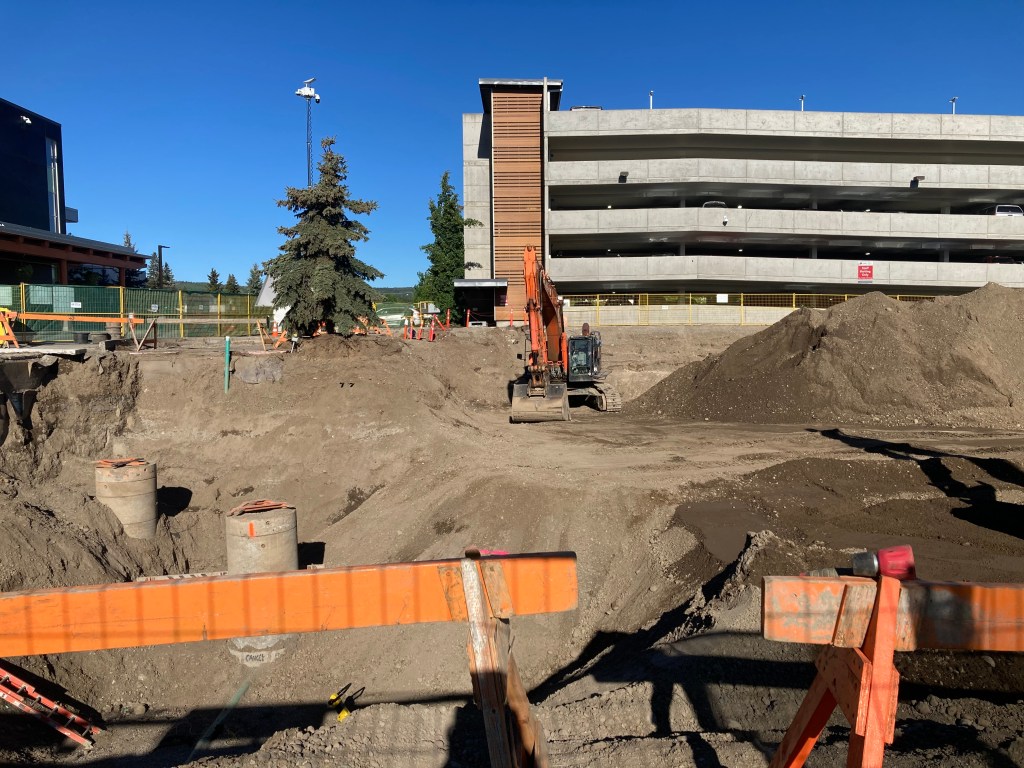

If you’re hoping to transplant a mature tree–or anything more than a sapling–and give it a chance at survival, it’s a good idea to get an arborist involved. While relatively large trees can certainly be moved and thrive in their new locations, they can be sensitive to disturbances and will need extra care in the removal, transportation, and transplantation processes, as well as ongoing care once they’re back in the ground. We don’t just want it to make it to its new home alive, but to continue grow there.
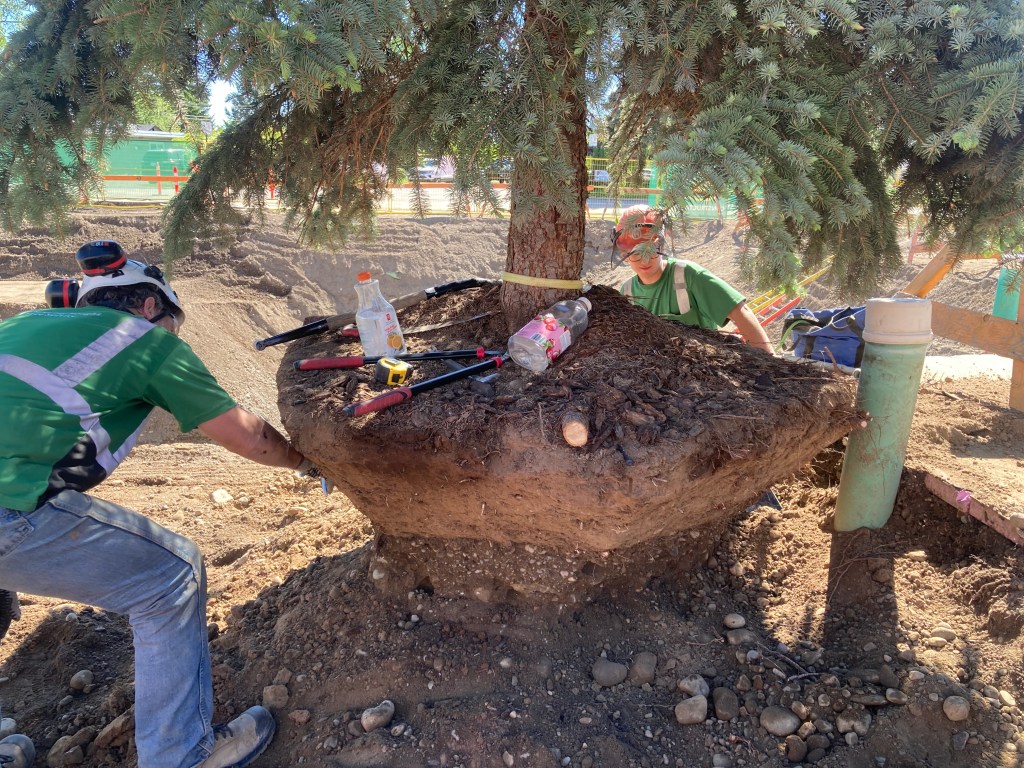
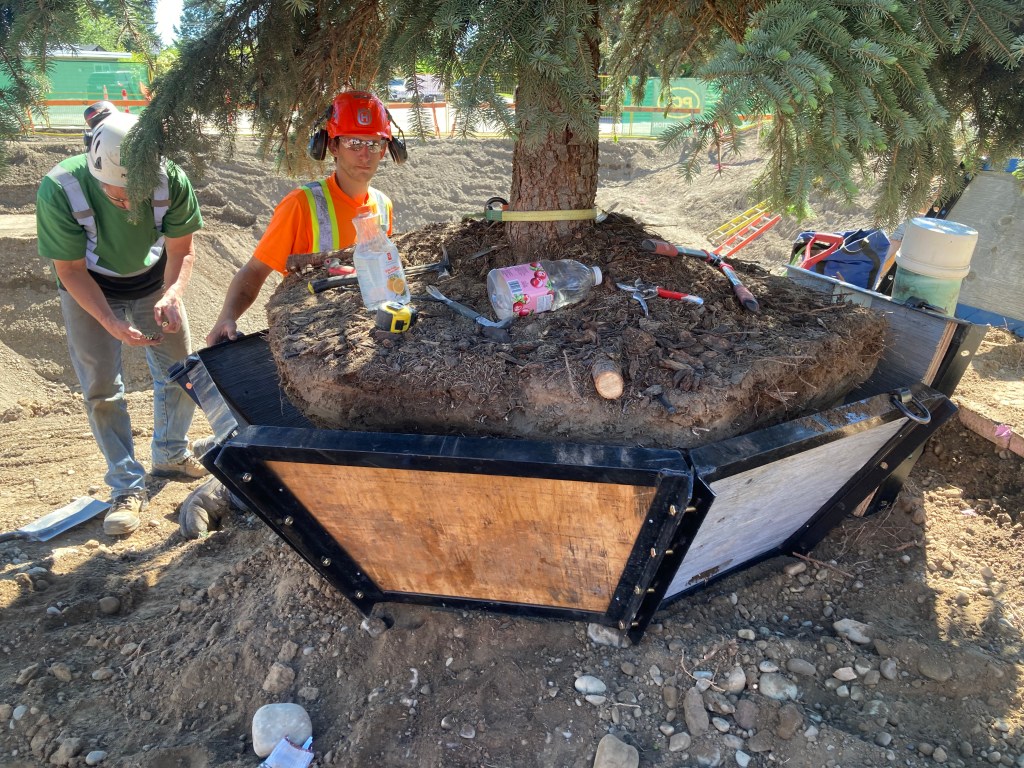
So of course, the priority was to minimize the damage undergone by the tree as much as possible during the move. It may seem impossible to do, but trees can actually survive really well as long as you keep enough of the root ball, about one foot across the root ball for every inch in diameter of the trunk. This meant we were aiming for a 6-foot root ball, which had to be shaped to fit the custom cage that had been built to support the root ball–lifting it while keeping most of the dirt around the roots.
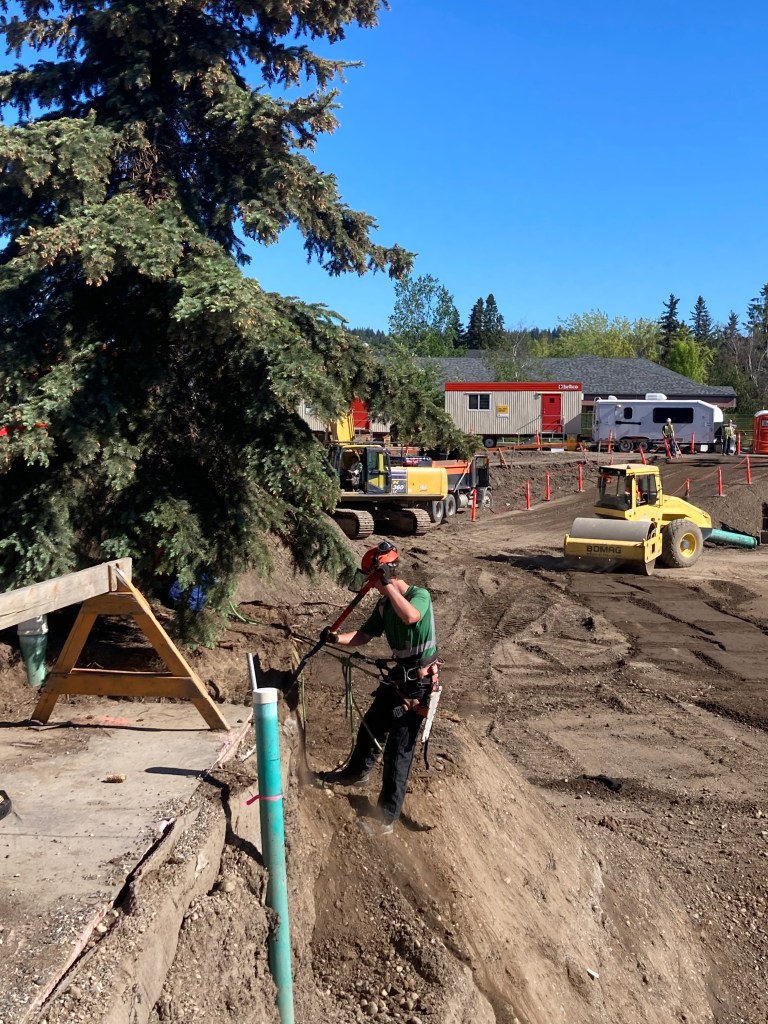
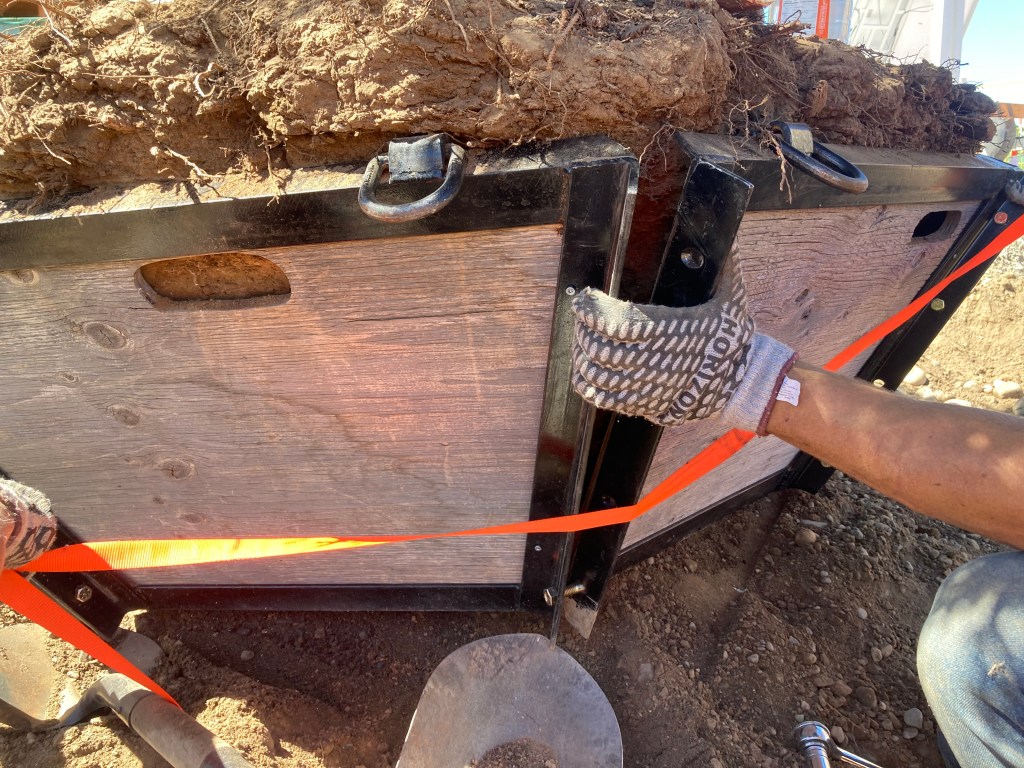
First, the massive excavator they had on-site helpfully built a platform on two sides of the tree for us to work on, and pulled most of the dirt and gravel away from the root ball. Then, it was up to us to shape the root ball with hand shovels, carefully digging and pruning roots as cleanly as possibly to avoid rot. The cage was a hexagonal structure two feet deep, six feet across at the top and four across at the bottom, so there were some pretty precise angles to replicate and lots of measuring before we could fit the cage on over the roots. It went on in six panels, lined with plywood, and then was bolted together at the corners.


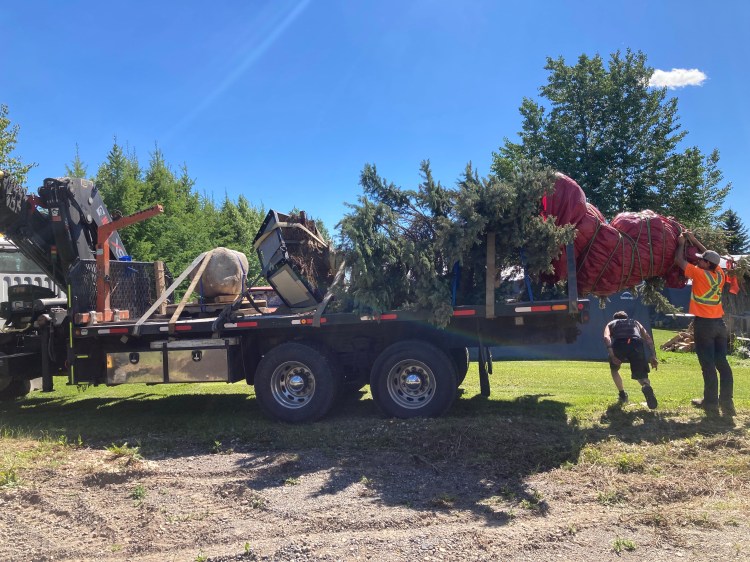
After that, the crane truck arrived. Pretty cool, right? Each side of the tree was lifted slightly off the ground one at a time to get slings under the cage, and then slowly but surely the tree was lifted up and onto the deck of the truck, then laid down to rest on one of the sides of the cage and a sling, kind of like how they transport whales (or at least that’s the connection I made). They wrapped up the top of the tree in a tarp to prepare it for highway speeds and strapped it down to the deck, trying to squish and bend as few branches as possible.

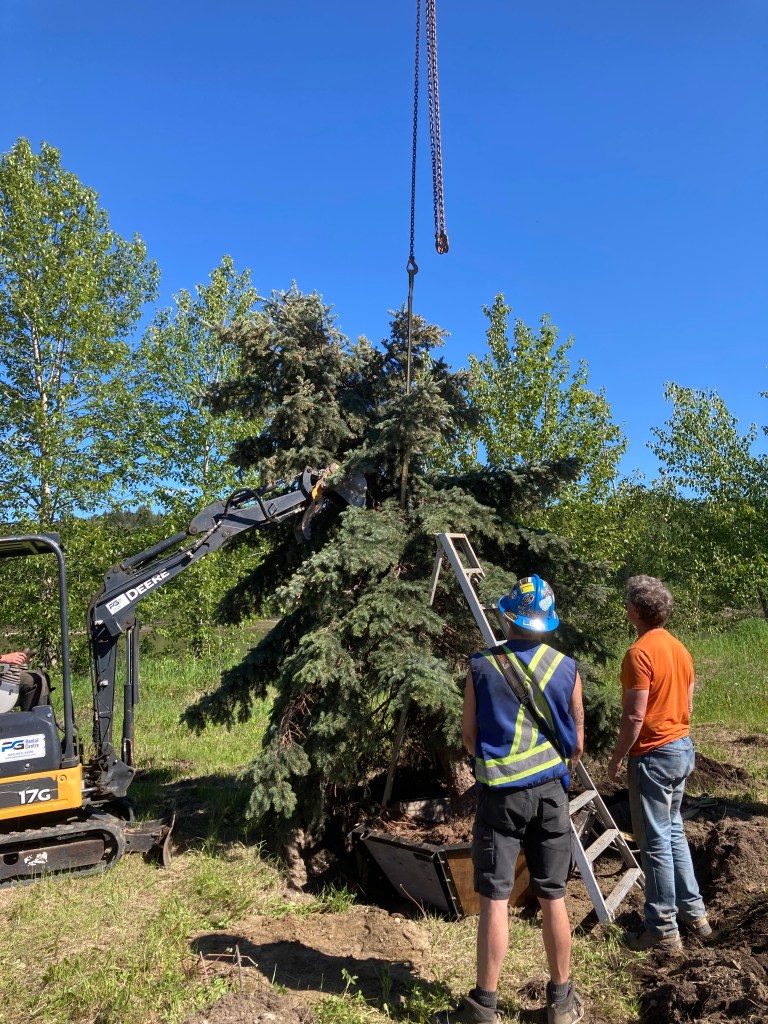
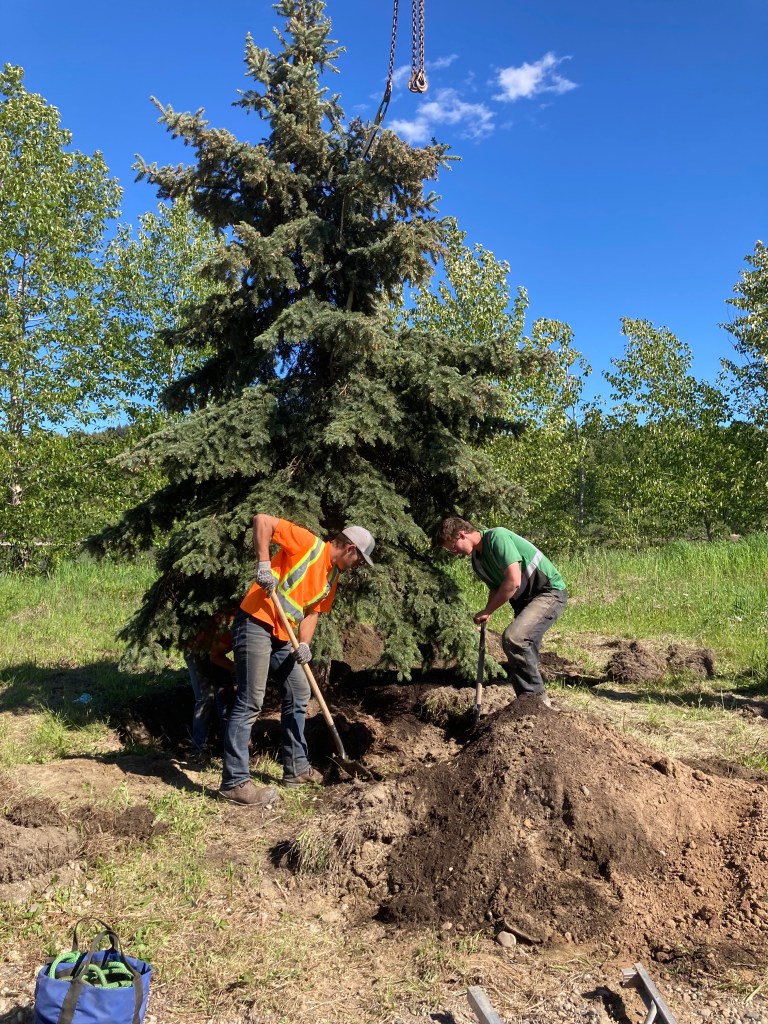
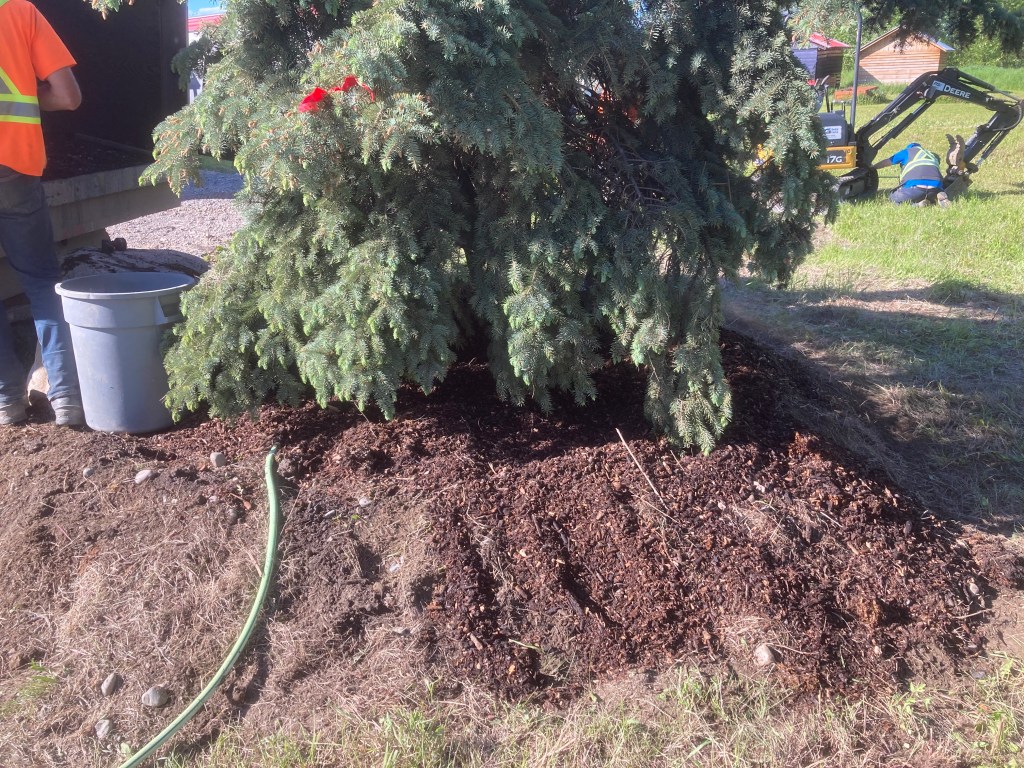
After the half-hour jaunt out to the transplant site in Shelley, it was time to do the whole thing in reverse and get the tree back in the dirt. Once the tree was lifted into the prepared hole, the crane held it up while we shovelled in enough dirt to hold it up, then it was released and the roots were covered with soil amended with beautiful compost from the Prince George Transfer Station. The tree was fertilized while the dirt was going back in, and then the dirt was covered with about 3 inches of partially composted mulch with a soaker hose underneath.
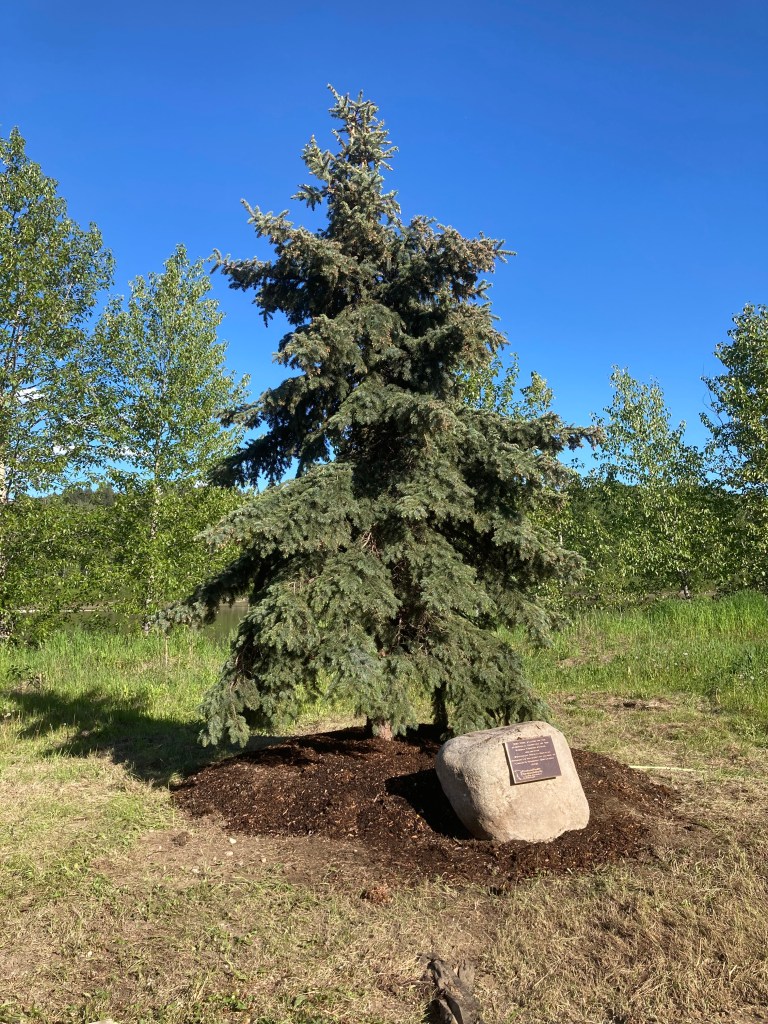
The rock holding the dedication plaque had also come along with the tree, and it was positioned in front as the final icing on the cake. The tree looks pretty happy in its new home!
 Whispering Boughs Tree Service